WOMEN IMAMS IN THE MASAAJID? WELL SORT OF….. THEY DID IT IN CHINA..
What if we had women inside the masaajid during the day to help other women cope with woman related issues? What if the local masjid was a go to place, where women could go for sisterhood, acceptance, healing, knowledge, or other kinds of help, maybe even marriage? Not that she can’t acquire those things at the masaajid now, but it’s often hit or miss, and most masaajid are only open for the 5 prayers and Jum’ah.
But what if we proactively emphasized care for unmarried women, windows and poor women, and women who aren’t connected, especially in light of the current condition of Muslim women in urban communities? The Prophet صلى الله عليه وسلم said, “The one who goes about serving the widows and the poor is like a mujaahid in the path of Allah”.
A long time ago, in China, particularly among the Hui Muslim community, there was a historical tradition of just that very thing . In China, there were female religious figures known as nü ahong (女阿訇) or nüsi (女寺), who served as female imams or mosque leaders for women. These women played important roles in teaching Islamic knowledge, leading women in prayers, and providing religious guidance within women-only mosques or women’s sections of mixed mosques.
Historical Background
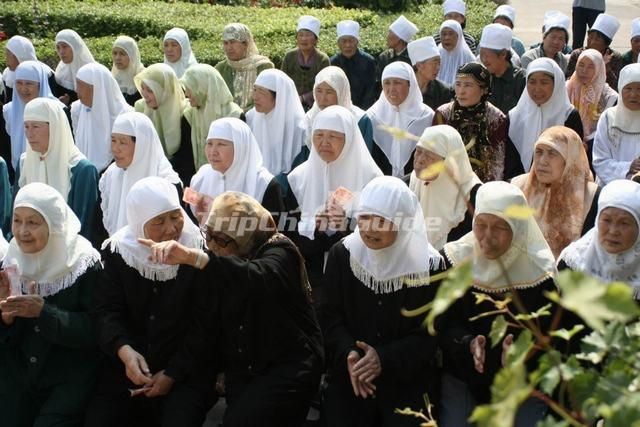
The tradition of female religious leaders is most prominent among the Hui Muslims (a predominantly Chinese-speaking Muslim ethnic group). The practice was less common among Uyghur or other Turkic Muslim groups in China.
Women’s mosques emerged during the Ming (1368–1644) and Qing (1644–1912) dynasties. It was influenced by both Islamic traditions and Chinese cultural practices that emphasized gender separation.Unlike in many other Muslim-majority societies, where women typically pray at home or in separate sections of mosques led by male imams, the Hui tradition allowed for female-led spaces.
However, the woman who presided over these female safe spaces were women who were versed in Islamic adab, and in the religion. Sometimes they were scholars in their own right.
The Nü Ahong would instruct women and girls in the Quran, hadith, and Islamic rituals. Many of them were themselves trained in Islamic schools, or madrasas, or taught by senior female or male religious leaders.
While they did not lead mixed-gender prayers (which is standard in mainstream Sunni and Shia Islam), they lead women-only congregations in prayers, including Friday prayers in some cases.
They also oversaw religious ceremonies such as weddings, funerals, and Ramadan activities for women. These women would act as spiritual guides, counselors, and mediators in women’s personal and family matters.
The Hui tradition of female imams is unique compared to most of the Muslim world, where women rarely lead prayers.
Similar practices exist in Indonesia and West Africa, but China’s system of women’s mosques with female leaders is particularly structured. The tradition of nü ahong and women’s mosques in China reflects a blend of Islamic teachings and local cultural adaptations. While these female religious leaders once held significant influence, their role has been diminishing due to political and social changes.
However, they remain an important part of China’s Islamic heritage, showcasing the diversity of Muslim women’s leadership in religious life.
Perhaps such a situation would have benefit here in Muslim America, notwithstanding that such a need to more accutely address the needs of Muslim women in Muslim America is hard felt.
The practice of a woman leading a prayer of women is not without precedent. During the time of the Prophet Muhammad صلى الله عليه وسلم , there were instances where women led other women in prayer.
One well-known example is Umm Waraqah bint Abdillah Ibn al-Harith, a female Companion of the Prophet صلى الله عليه وسلم The Prophetﷺ appointed her as the imam for her household, which included women and an elderly mu’adhdhin (caller to prayer). This is recorded in Sunan Abi Dawud and other hadith collections.
Umm Waraqa was known for her piety and knowledge of the religion and was regarded as a scholar amongst the companions of the Prophet صلى الله عليه وسلم She was one of the few women who had memorized the whole Quran.
Most scholars agree that it is permissible for a woman to lead other women in prayer, based on this precedent. This view is codified in the Shaafi’ee school of law
There is a clear historical and jurisprudential basis for women leading other women in prayer during the Prophet’s time, and in carrying the title of Imam in that capacity. And Allah knows best.
And Allah knows best.
Imam Luqman Ahmad
Imam Luqman Ahmad is a writer, a researcher, and Imam at Large in the Philadelphia area. Previously Imam Luqman has served as an Imam of a Masjid for more than thirty years. He can be reached at imamabulaith@yahoo.com


Leave a Reply