
I’m not anexpert on Iran, an expert on military strategy, nor an expert on US foreign policy. In fact, I’ve never been to Iran, never been in the military, and only know about US policy what I read on the internet, and hear out of the President’s mouth on T.V. However, based on what I view regarding the current, extremely tense situation as of February 21st, 2026, a US bombing campaign targeting regime change in Iran would almost certainly trigger a catastrophic and multifaceted conflict. The consequences would ripple far beyond Iran’s borders, impacting the entire Middle East and global stability. I don’t see a win for the U.S., Iran, the Middle East, or the world in any possible scenario where we were to effectively go to war with Iran to effect regime change.
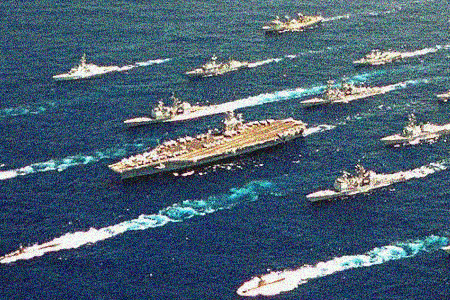
Below are several potential outcomes, ranging from the intended goal to the most likely and dangerous consequences.
Possible Outcome Description, Likelihood & Analysis
1, Regime Change & Democratic Transition The Iranian leadership is toppled, paving the way for a new, democratic government. Highly Unlikely. This is described as a “hopeful,” optimistic scenario. Past Western interventions in Iraq and Libya show that removing a dictator often leads to years of chaos and instability, not smooth democracy.
2. Regime Survives, Policies Moderate. The leadership remains in power but curtails its nuclear program and support for regional militias. Unlikely. The Iranian regime, particularly Supreme Leader Ali Khamenei, has shown consistent resistance to change for 47 years. Experts compare this to a “Venezuelan model,” where pressure forces limited change, but it’s unlikely.
3. Regime Collapse, Replaced by Military Rule The current theocracy falls, but power is seized by a military government, likely led by the Islamic Revolutionary Guard Corps (IRGC). Plausible. The IRGC is deeply embedded in Iran’s politics and economy. In the chaos following an attack, they would be the most organized force to fill the power vacuum, leading to a different, but still authoritarian, regime.
4. Full-Scale Regional War. Iran retaliates directly against US forces and allies, using its ballistic missiles and drones to strike US bases in the Gulf (e.g., in Bahrain and Qatar) and targets in Israel. Highly Likely. Iran has repeatedly vowed to retaliate against any attack. Its Gulf Arab neighbors, all US allies, are extremely jittery, fearing they could be caught in the crossfire.
5. Global Economic Shock. Iran disrupts shipping in the Strait of Hormuz, through which about 20-25% of the world’s oil passes. Very Likely. Iran has threatened to close the Strait if attacked, a move it has attempted before. This would cause oil prices to skyrocket, triggering a global economic crisis.
6. Internal Collapse & Chaos The regime falls, but no clear authority replaces it, leading to a power vacuum. A Very Real Danger. Iran’s 93 million people include ethnic minorities (Kurds, Baluchis, Azerbaijanis) who might seek to protect their own areas. The country could descend into civil war or fragmentation, sparking a massive humanitarian and refugee crisis. This is the “worst outcome” that neighboring countries fear.
Direct US-Iran Naval Clash. A direct confrontation at sea, potentially including a “swarm attack” by Iranian fast boats and drones on a US warship. Low Probability, High Impact. While seen as unlikely, the sinking of a US warship would be a massive humiliation and would dramatically escalate the conflict, making it impossible to de-escalate.
Key Factors Influencing the Outcome
Several critical factors will determine which of these scenarios, or a combination thereof, ultimately plays out:
The Scope of the Attack: The US appears to be weighing two major military options. A more moderate option would involve a massive but carefully targeted assault on Iran’s air defenses, military infrastructure, nuclear facilities, and IRGC bases. The goal would be to shock the regime into major concessions. The second, more muscular option would be a series of strikes explicitly designed to decapitate the leadership, potentially targeting figures up to and including Supreme Leader Ali Khamenei, with the explicit aim of triggering the regime’s collapse.
The “Day After” Question: A central concern for the US and its allies is the complete uncertainty of what would follow a successful regime change. There are no ready-made, unified opposition leaders inside Iran. The most likely successors to fill a power vacuum would be military figures from the IRGC, leading to another form of authoritarian rule, or the country could fragment into chaos, as seen in Libya and Syria.
Israel’s Role: The Israeli government is reportedly pushing for a maximalist scenario that targets not only Iran’s nuclear program but also seeks regime change. Any US action is likely to be a joint US-Israeli campaign, which could broaden the scope and intensity of the conflict and would almost certainly draw retaliatory strikes on Israel itself.
Iran’s Resolve and Capabilities: The Iranian regime has shown remarkable resilience in the face of decades of sanctions, domestic protests, and the decimation of its proxy network by Israel. Its leadership is prepared to use unlimited force to remain in power. Furthermore, Iran has a significant arsenal of ballistic missiles and drones, and a history of asymmetric warfare, ensuring it can inflict significant pain on its adversaries even if it cannot match US military might.
In short, while the US has amassed formidable military power in the region, the use of force to enact regime change in Iran is a gamble with extraordinarily high stakes. The most likely outcomes are not a stable democracy, but rather a devastating regional war, a severe global economic shock, or a prolonged period of violent chaos inside Iran. May Allah guide our President and our government to make better choices.
Imam Luqman Ahmad
imamabulaith@yahoo.com


Leave a Reply