
A lot of Muslims believe that ignorance of religion is a trivial matter that has no consequences. Nothing can be further from the truth. Divorce is one of the most legally detailed areas of the sharia, designed to protect families from chaos, prevent injustice, and ensure that separation does not destroy the rights of spouses or children. When a community lacks fiqh literacy and has no shared madhhab, divorce becomes one of the most destructive points of fragmentation—legally, emotionally, and institutionally. For Black American Muslims, who already carry the weight of historical family disruption, incarceration, and community instability, inconsistent divorce practices create deep and lasting harm.
1. Divorce Becomes Improvised Instead of Legal
Islamic divorce is not a casual occurrence. It is a legal procedure with conditions, steps, witnesses, waiting periods, financial rights, and reconciliation mechanisms. Without fiqh:
- men issue ṭalāq in anger, thinking it is valid when it is not
- women believe they are divorced when they are not
- couples separate without any legal process
- imams give contradictory rulings based on personal opinion
- some masjids require civil divorce first, others forbid it
- some treat text messages as valid ṭalāq, others reject it
Understand that the purpose of the sharīʿah in matters of divorce is to slow people down, cool the situation, and force structure where emotion wants to take over. Every rule—about witnesses, waiting periods, arbitration, timing, intention, and procedure—is designed to prevent a family from being torn apart by a moment of anger, humiliation, or impulse. The maqṣad (core objective) of divorce law is protection: protection of the marriage from collapse, protection of spouses from injustice, and protection of children from instability. This is why the Qur’an repeatedly commands patience, arbitration, and reflection before separation, and why the Prophet ﷺ condemned impulsive divorce. The sharīʿah treats divorce as a legal process, not an emotional reaction, because families cannot survive if their most important decisions are made in moments of rage or despair.
Without fiqh—and without a madhhab to standardize that fiqh—divorce in the Black Muslim community often becomes the opposite of what the sharīʿah intended. Instead of a structured legal procedure, it becomes an emotional decision: a text message, a heated argument, a threat, or a dramatic announcement. Instead of arbitration, people separate based on feelings. Instead of a waiting period, people move on immediately. Instead of rights being honored, they are forgotten or improvised. This turns divorce into chaos—contradictory rulings from different imams, invalid divorces treated as valid, valid divorces treated as invalid, and children caught in the middle. The sharīʿah was designed to prevent this chaos, but without fiqh literacy and a shared madhhab, the community loses the very tools meant to protect it. This is why divorce becomes not just a personal crisis, but a communal wound—one that repeats across generations unless a stable legal framework is restored.
Impact on Black American Muslims
This improvisation mirrors the instability already present in many Black families due to systemic pressures. Instead of Islam healing that instability, inconsistent fiqh recreates it and perpetuates it.
2. Invalid Divorces Create Marital Chaos
A divorce can be invalid for many reasons:
- issued during menstruation
- issued during pregnancy
- issued without intention
- issued under coercion
- issued in a state of extreme anger
- issued improperly (e.g., triple ṭalāq in one sitting)
Without fiqh, these distinctions are unknown. This leads to:
- couples thinking they are divorced when they are still married
- couples thinking they are married when they are actually divorced
- remarriages that are invalid
- children born into legal confusion
- imams contradicting each other about the same case
Impact on Black American Muslims
This creates a cycle of broken families, invalid marriages, and children caught in legal limbo—problems that disproportionately harm a community already fighting for family stability.
3. Women’s Rights Are Often Lost or Ignored
The sharia gives women specific rights in divorce:
- the right to mahr
- the right to maintenance during ʿiddah
- the right to housing during ʿiddah
- the right to arbitration
- the right to seek khulʿ
- the right to financial settlement in certain cases
Without fiqh:
- many women receive none of these rights
- some imams pressure women to “forgive the mahr”
- others deny women the right to seek divorce
- some communities treat women’s complaints as emotional rather than legal
- many women are left financially stranded
Impact on Black American Muslims
Black women—already carrying the burden of economic inequality—are left unprotected by the very system meant to safeguard them.
4. Men’s Rights Are Also Violated
The sharia protects men as well:
- the right to know whether a divorce is valid
- the right to arbitration before separation
- the right to financial fairness
- the right to maintain a relationship with their children
- the right to avoid false accusations
Without fiqh:
- men are sometimes told they are divorced when they are not
- some imams pressure men into divorces without due process
- fathers lose access to their children without legal justification
- financial obligations become arbitrary rather than lawful
Impact on Black American Muslims
Black men—already facing systemic criminalization and family separation—experience further instability when Islamic divorce is handled without law.
5. Custody Decisions Become Emotional, Not Legal
Islamic custody (ḥaḍānah) has clear rules:
- who receives custody at each age
- conditions for custody
- when custody transfers
- visitation rights
- the child’s welfare as the primary concern
Without fiqh:
- custody becomes a power struggle
- imams make decisions based on sympathy
- parents weaponize children against each other
- children are moved around without stability
- rulings differ from masjid to masjid
Impact on Black American Muslims
Children—already vulnerable to instability—lose the protection the sharia intended for them.
6. No Madhhab Means No Consistency
Every madhhab has a complete, internally consistent system for:
- ṭalāq
- khulʿ
- judicial divorce
- arbitration
- custody
- financial rights
- reconciliation
- remarriage
Without a madhhab:
- every imam uses his own method
- every masjid becomes its own court
- every divorce becomes a crisis
- every ruling becomes personal
- every family suffers differently
Impact on Black American Muslims
This inconsistency destroys trust in religious leadership and prevents the community from building stable family courts, mediation systems, or national standards.
7. The Result: Generational Instability
When divorce is handled without fiqh:
- families break unnecessarily
- children lose stability
- women lose rights
- men lose rights
- remarriages become invalid
- communities split
- imams contradict each other
- institutions collapse under conflict
For Black American Muslims, this is catastrophic. The sharia was meant to heal generational trauma—not reproduce it. Divorce is not simply a personal matter. It is a legal, communal, and civilizational matter. What happens during and after a divorce can affect entire generations of a family for generations. Without fiqh and a shared madhhab, divorce becomes a source of chaos rather than justice. For Black American Muslims, who urgently need stability, continuity, and the absence of structured fiqh in divorce is one of the most damaging weaknesses in community life. When will enough be enough? May Allah end this madness. Allah will not change the condition of a people until they themselves change. And Allah knows best.
Imam Abu Laith Luqman Ahmad
imamabulaith@yahoo.com
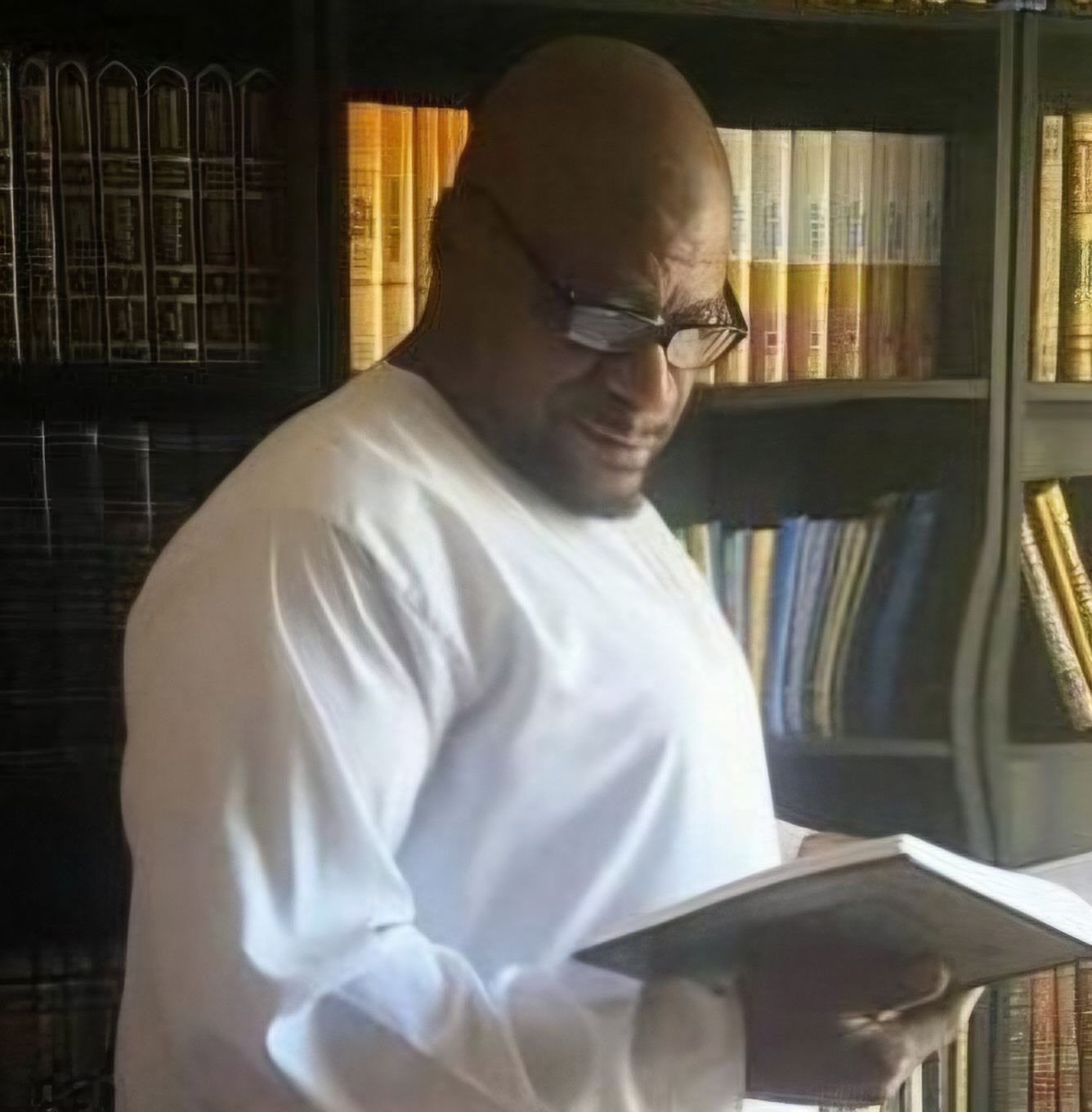
Shaykh Luqman Ahmad, born and raised in Philadelphia Pa, and son of American converts to Islam, is an American Muslim thinker, scholar, writer, educator, and community leader with more than four decades of service. A graduate of the Islamic University of Omdurman, with time spent at Umm al-Qura University, and in classes at the Haram in Mecca. Imam was first introduced to Islamic learning by his parents. He studied with numerous scholars, most notably the late “Sayyid Sabiq”, author of the book “Fiqh as-Sunnah”. For a list of his teachers, consult his blog at imamluqman.wordpress.com. He served as the Imam of Masjid Ibrahim Islamic Center in California for 20 years, guiding one of the region’s most diverse Muslim communities with a blend of classical Sunni scholarship and deep awareness of American social realities. Over the course of his career, he has also served as an Imam and or resident scholar at several masaajid across the country, including in Philadelphia, Toledo, Sacramento, and Folsom, California.
He is the author of several books, most notably The Devil’s Deception of the Modern-Day Salafi Sect, a widely discussed critique of contemporary Salafism, and Double Edged Slavery, an original work examining the mentality, history, and lived experience of Black Sunni Muslims in America. His writings, lectures, and community work continue to influence conversations on Islamic law, identity, leadership, and the future of American Muslim communities. Currently, he writes, conducts research, and serves as a guest khateeb at the Quba Institute in Philadelphia. He can be reached at: imamabulaith@yahoo.com


Leave a Reply