بِسْمِ اللَّهِ الرَّحْمٰنِ الرَّحِيمِ، وَالصَّلَاةُ وَالسَّلَامُ عَلَى رَسُولِ اللَّهِ صَلَّى اللَّهُ عَلَيْهِ وَسَلَّمَ، وَبَعْد
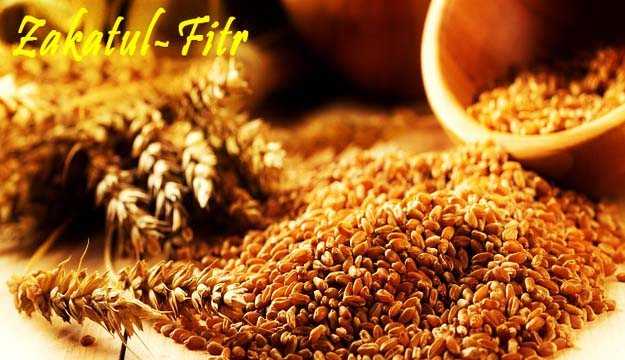
What is Zakatul Fitr?
Zakatul Fitr, also known as Sadaqatul Fitr, is a mandatory charitable contribution that every Muslim must pay at the end of Ramadan, before the Eid al-Fitr prayer. It serves as a purification for the fasting person and provides food for the poor during the celebration of Eid.
This obligation is distinct from the annual Zakat on wealth (Zakatul Mal) and was first legislated in Sha’ban of the second year after Hijrah—the same year fasting Ramadan became obligatory. Thus, when Muslims observed their first Ramadan, Zakatul Fitr was already established as part of the worship system.
Evidence (daleel)from Islamic Sources
Primary Evidence:
Abdullah Ibn Umar (رضي الله عنه) reported: “The Messenger of Allah (ﷺ) enjoined Zakatul Fitr—one Sa’ of dates or one Sa’ of barley upon the slave and the free person, the male and the female, the young and the old among the Muslims. And he commanded that it be paid before the people went out to pray [Eid].” [Bukhari 1503, Muslim 984]
A ṣāʿ is the Prophetic volumetric measure used for Zakat al‑Fiṭr. It is not a weight but a volume, traditionally measured as four mudd, with each mudd being a double‑handful using a standardized container. Classical and contemporary measurements allow us to translate this into modern units so people can give the correct amount of dates, barley, rice, or other staple foods.
What a ṣāʿ equals in modern measurement across the major fiqh sources and contemporary measurements:
- A ṣāʿ ≈ 3 liters of volume.
- When converted to weight, the exact number varies because different foods have different densities.
- For Zakat al‑Fiṭr, most scholars estimate 2.2–3.0 kg depending on the food type.
- Shāfiʿī and Ḥanbalī estimates: ≈ 2.175 kg.
- Ḥanafī estimate (more precautionary): ≈ 3 kg.
- This explains why you see different numbers—because a ṣāʿ is a volume, not a fixed weight.
Purpose and Timing:
Ibn Abbas (رضي الله عنه) reported: “The Messenger of Allah (ﷺ) obligated Zakatul Fitr as a purification for the fasting person from idle and obscene speech, and as food for the poor. Whoever pays it before the [Eid] prayer, it is accepted as Zakatul Fitr. Whoever pays it after the prayer, it is merely a charity.” [Abu Dawud 1609, Ibn Majah 1827]
Who Must Pay Zakatul Fitr?
Universal Obligation
Zakatul Fitr is obligatory upon every Muslim—male and female, young and old, free and slave—who possesses food beyond their immediate needs on the night of Eid.
Financial Threshold Requirements
Majority Position (Maliki, Shafi’i, Hanbali):
Simply having food beyond one’s needs on the night/day of Eid is sufficient. The nisab (minimum wealth threshold) is not required.
Hanafi Position:
One must possess the nisab equivalent (612.36g of silver or approximately $470-515) in excess of basic needs.
Head of Household Responsibilities
The head of household pays on behalf of:
- Themselves
- Their spouse(s)
- Minor children
- Financial dependents
Note: Ibn Qudamah states it’s recommended (not obligatory) to pay for unborn children, based on Uthman’s (رضي الله عنه) practice.
Amount to Pay
Standard Measurement
One Sa’ per person, approximately 2.5-3 kg of staple food:
- Contemporary scholars: ~2.5 kg (5.5 lbs)
- Saudi Permanent Committee: ~3 kg (6.6 lbs)
Acceptable Food Types
The Prophet (ﷺ) specified:
- Dates (tamr)
- Barley (sha’ir)
- Wheat (qamh)
- Raisins (zabib)
- Dried yogurt/cottage cheese (aqit)
The dominant scholarly position holds these were examples, and any local staple food is acceptable.
Recipients of Zakatul Fitr
Majority View
The overwhelming majority of scholars restrict Zakatul Fitr exclusively to the poor and needy (Fuqara’ and Masakin), based on Ibn Abbas’s hadith: “…and as food for the poor.”
Ibn Taymiyyah states: “It is not permissible to give Sadaqatul Fitr except to the poor.” [Majmu’ al-Fatawa, 25/71]
Hanafi Position
Hanafi scholars permit distribution to all eight categories mentioned in Quran 9:60, though giving to the poor remains strongly preferred.
Contemporary Issues
Can Cash Be Given Instead of Food?
This represents one of the most significant contemporary debates:
Position 1: Cash Not Permissible
- Schools: Majority (Maliki, Shafi’i, Hanbali), plus Ibn Baz, Ibn Uthaymeen, Al-Albani
- Reasoning: The Prophet (ﷺ) explicitly specified food items; the hadith states “food for the poor”
- Ibn Uthaymeen: “Whoever gives money has not fulfilled the obligation”
Position 2: Cash Permissible
- Schools: Hanafi, plus contemporary scholars like Yusuf al-Qaradawi and Abdullah bin Bayyah
- Reasoning: Cash better achieves the objective (maqasid) of benefiting the poor in modern contexts
- Historical precedent: Umar ibn Abd al-Aziz accepted cash from Basra residents
Practical Guidance:
- Following Maliki/Shafi’i/Hanbali/Salafi guidance → Give food only
- Following Hanafi or contemporary positions → Cash acceptable
- Many Western institutions adopt the cash-permissible position for what many of them say are practical reasons
Can Mosques Use Zakatul Fitr for Administrative and Masjid Operations?
Clear Answer: NO—This is not permissible
Zakat al‑Fitr was instituted in Shaʿbān of the second year after Hijrah, just before the first Ramadan fast became obligatory. Its timing shows that the Prophet ﷺ intended it to be part of the complete Ramadan system from the very beginning—purifying the fasting person at the end of the month and ensuring that the poor could celebrate Eid with dignity. The classical hadith of Ibn ʿAbbās (raḍiyAllāhu ʿanhu), judged authentic in the major collections, establishes both its purpose and its required recipients: purification for the fasting person and food for the needy. That is clear. For this reason, all four madhāhib agree that Zakat al‑Fitr must be given directly to the poor and cannot be diverted to institutions, buildings, or administrative costs.
A minority of contemporary scholars expand fi sabīlillāh to include essential Islamic institutions, but this position becomes a slippery slope in the American context because many masājid—especially large, suburban, well‑funded ones—do not actually serve the poor in any meaningful or sustained way. The original justification for this minority view is that in non‑Muslim lands, the masjid often functions as a school, a social‑service hub, a food‑distribution center, and a community refuge. In that scenario, supporting the masjid’s basic operations can be framed as indirectly supporting the poor. But this logic collapses when the masjid does not, in fact, provide those services. When a masjid’s programs, membership, and priorities are oriented toward middle‑class suburban families, not the poor, the rationale for using zakāt funds disappears entirely.
In reality, many multi‑million‑dollar masājid in the United States have little to no poor population in their congregation. Their budgets are spent on large buildings, landscaping, high‑end architecture, and programming for affluent members. These institutions often have no food pantry, no zakāt distribution office, no social‑service infrastructure, and no meaningful engagement with the poor in their city. In such environments, allowing zakāt al‑Fitr to be used for “masjid administration” becomes an open door to misuse. Funds intended by the Prophet ﷺ to reach the poor directly can easily be absorbed into utilities, staff salaries, mortgage payments, or general operating costs—none of which fulfill the requirement of tamlik or the explicit purpose of Zakat al‑Fitr.
This is why the majority of scholars insist on strict boundaries: once zakāt is allowed to flow into institutions that do not serve the poor, the poor themselves are the first to lose. The minority view was meant for exceptional circumstances—small, struggling communities where the masjid is literally the only place the poor can turn. Applying that view to wealthy suburban masājid with no poor members and no social‑service mission undermines the very spirit of zakāt and risks transforming a sacred obligation into a budget‑patching tool. The safest and most faithful approach is to reserve Zakat al‑Fitr for the poor alone and to fund masjid administration through ṣadaqah, waqf, and community giving, not through the rights of the needy.
Together, these positions reflect a tension between classical textual precision and the realities of modern minority‑Muslim communities like those in the United States. The strongest fiqh approach, and closest to the sunnah, remains to reserve Zakat al‑Fitr for the poor, while supporting masjid operations through ṣadaqah, waqf, and community fundraising—unless a community faces extraordinary circumstances that justify the minority interpretation. Near-unanimous scholarly consensus prohibits using Zakatul Fitr for mosque administration, utilities, or salaries because:
- Specific designation: Zakatul Fitr is exclusively for the poor
- Misappropriation: Using funds otherwise constitutes breach of trust (amanah)
- Invalid discharge: Misuse means the giver’s obligation remains unfulfilled
Even the Quranic allowance for “those who administer” zakat (9:60) refers to government-appointed collectors in an Islamic state system, not mosque staff or volunteers.
Ibn Taymiyyah clarifies: “Building mosques is not permissible from Zakat funds according to the majority of scholars.” [Majmu al-Fatawa, 28/344]
Quick Reference Summary
| Aspect | Ruling |
|---|---|
| Obligation | Fard (obligatory) upon every Muslim |
| Who pays | Every Muslim with means; heads of household for dependents |
| Amount | 1 Sa’ (~2.5-3 kg) of staple food per person |
| When to pay | Before Eid prayer (can be paid from 1st Ramadan) |
| Recipients | Poor & needy (majority); all 8 categories (Hanafi) |
| Cash option | Not permitted (majority); Permitted (Hanafi & some contemporary scholars |
| Mosque admin use | Not permissible by consensus |
References
- Sahih al-Bukhari, Kitab al-Zakat (1503, 1508)
- Sahih Muslim, Kitab al-Zakat (984)
- Sunan Abu Dawud (1609), Ibn Majah (1827)
- Al-Mughni by Ibn Qudamah
- Al-Majmu’ by Imam al-Nawawi
- Bada’i al-Sana’i by Al-Kasani
- Majmu’ al-Fatawa by Ibn Taymiyyah
- Fiqh al-Zakah by Yusuf al-Qaradawi
- Fatawa of the Permanent Committee (Saudi Arabia)
May Allah accept our fasting and Zakatul Fitr, and grant us the reward of Ramadan and blessings of Eid. This article is intended to give a general understanding. Masaajid in the United States each handle the distribution of zakatul fitr differently. For specific madhab positions or contemporary fatawa on particular situations, please consult your own Imam, the masjid you attend, or qualified scholars. And Allah knows best. Imam Abu Laith Luqman Ahmad
imamabulaith@yahoo.com


Leave a Reply