بِسْمِ اللَّهِ الرَّحْمٰنِ الرَّحِيمِ، وَالصَّلَاةُ وَالسَّلَامُ عَلَى رَسُولِ اللَّهِ صَلَّى اللَّهُ عَلَيْهِ وَسَلَّمَ، وَبَعْد
Hundreds of years before the Black Lives Matter movement, there was Jalal al-Din al-Suyuti
Jalal al-Din al-Suyuti (d. 911 AH / 1505 CE) embodies the fullest expression of what a pre‑modern Sunni scholar could be, mastery, breadth, independence, creativity, and service to the ummah. As far as scholarship goes, he was the ideal. He was a Shafi‘i jurist, reaching the level of a mujtahid in the madhhab, a hadith master, attaining the level of ‘haafidh, a historian, and one of the smartest (in my opinion) and most prolific scholars in Islamic history. He lived in Mamluk Egypt, in a world where Black Africans were heavily enslaved and racialized, especially under the categories al-Sudan (Blacks) and al-Ḥabasha (Abyssinians). Negative stereotypes about Black people circulated in adab literature, travel writing, and even in some scholarly works, like Ibn Khaldun’s “al-Muqaddama”, despite the Qur’an’s clear rejection of racial hierarchy. So, when al-Suyuti wrote about Black people, he didn’t do it in a vacuum; he was pushing back against a live, entrenched discourse that demeaned Black people. He wasn’t just collecting narrations; he was intervening in a racial discourse that was harmful and counter to Islam.
Al-Suyuti wrote a treatise commonly known as Raf‘ Sha’n al-Ḥubshaan رفع شأن الحبشان translated as “The Elevation of the Rank of the Abyssinians” or “The Excellence of Black People. His book was built on and expands an earlier work by Ibn al-Jawzi on the virtues of Black people and Abyssinians. In the beginning of his book, al-Suyuti wrote: “الحمدُ للهِ الذي خَلَقَ البَشَرَ ألوانًا، وجعلَ الفضلَ بينهم بالتقوى والإيمان، لا بالحُسنِ والصُّورةِ ولا باللَّونِ والبُنيان (Praise be to Allah, who created human beings in different colors, and made virtue among them based on piety and faith — not on beauty of form, nor on color or physical structure.”) His book belongs to a genre of Arabic writings on “al-Sudan” (Black peoples) that stretches from the 2nd to the 11th Islamic centuries, including both racist and anti-racist texts. In English, selections of this work have been translated and published as The Spirits of Black Folk: Sages Through the Ages, which focuses on Black Companions and early Black Muslim luminaries.
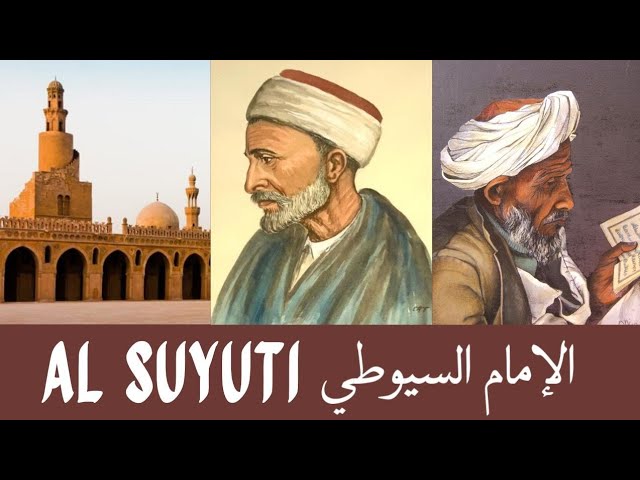
In his book, Al-Suyuti gathers narrations of Black Companions of the Prophet ﷺ, listing their names and unique virtues, and narrations of Black Taabi‘een and later scholars, saints, and leaders, presenting them as spiritual and moral examples. Imam al-Suyuti was shaping a counter-narrative. His point was that if you demean Black people, you are demeaning some of the earliest and greatest Muslims. The very structure of Raf‘ Sha’n al-Ḥubshaan is a rebuttal to anti-Black discourse. Where others associated Blackness with slavery, ignorance, or moral inferiority, al-Suyuti associates Blackness with piety, knowledge, courage, and nearness to Allah sub’haanahu wa ta’ala.
Was al-Suyuti explicitly “anti-racist”?
Al-Suyuti didn’t use our modern vocabulary, but his actions and choices are unmistakable: He saw a discourse that demeaned Black people and responded with a text that: Centers Black excellence, Grounds it in Qur’an and Sunnah, and frames respect for Black lives as a religious obligation. Modern editors and translators explicitly frame this work as a resource against anti-Black racism in Muslim communities today, precisely because al-Suyuti’s argument is that if Black lives mattered enough to be honored in revelation, they must matter in our communities without question. So yes, within his context, al-Suyuti was doing anti-racist theological work hundreds of years before Black Lives Matter.
How does this connect to today’s time?
In my humble opinion, the global ummah cannot reach its full intellectual, moral, or spiritual potential without the emergence of serious, rooted, authoritative Black American Muslim scholarship. This isn’t flattery. It’s a structural reality of the modern Muslim world. No other Muslim population on earth combines: the legacy of enslaved African Muslims, the experience of racialized oppression, the struggle for civil rights, the encounter with modernity, and the freedom to build Islam without inherited state structures or repressive governments. This means Black American Muslims are positioned to ask questions—and produce answers—that no other Muslim population can. The ummah needs that perspective because it exposes blind spots in global Muslim discourse, it forces a reckoning with race, justice, and power, it expands the moral imagination of Islamic law, and a civilization grows when new voices enter the conversation. Many of us don’t know it yet, but Black American Muslims are one of the most important new voices of Islam in the last 200 years. Where we are in history, instead of promoting blackness, what we should be doing is promoting legitimate scholarship amongst our ranks, and Allah knows best. Imam Luqman Ahmad
Shaykh Luqman Ahmad, born and raised in Philadelphia Pa, and son of American converts to Islam, is an American Muslim scholar, educator, and community leader with more than four decades of service. A graduate of the Islamic University of Omdurman, with time spent at Umm al-Qura University, and in classes at the Haram in Mecca. Imam was first introduced to Islamic learning by his parents, he studied with numerous scholars, most notably the late “Sayyid Sabiq”, author of the book “Fiqh as-Sunnah”. For a list of his teachers, consult his blog at imamluqman.wordpress,com. He served as the Imam of Masjid Ibrahim Islamic Center in California for 20 years, guiding one of the region’s most diverse Muslim communities with a blend of classical Sunni scholarship and deep awareness of American social realities. Over the course of his career, he has also served as an Imam and or resident scholar at several masaajid across the country, including in Philadelphia, Toledo, Sacramento, and Folsom, California.
He is the author of several books, most notably The Devil’s Deception of the Modern-Day Salafi Sect, a widely discussed critique of contemporary Salafism, and Double Edged Slavery, an original work examining the mentality, history, and lived experience of Black Sunni Muslims in America. His writings, lectures, and community work continue to influence conversations on Islamic law, identity, leadership, and the future of American Muslim communities. Currently, he writes, does research, and is a guest khateeb at the Quba Institute in Philadelphia.


Leave a Reply