بِسْمِ اللَّهِ الرَّحْمٰنِ الرَّحِيمِ، وَالصَّلَاةُ وَالسَّلَامُ عَلَى رَسُولِ اللَّهِ صَلَّى اللَّهُ عَلَيْهِ وَسَلَّمَ، وَبَعْد
The translation known as The Noble Qur’an (often called the Hilali–Khan translation) was produced in Saudi Arabia by Dr. Muhammad Taqi‑ud‑Din al‑Hilali and Dr. Muhammad Muhsin Khan, and published by the King Fahd Complex for the Printing of the Holy Qur’an in Madinah. It was explicitly sponsored, printed in massive quantities, and distributed worldwide for free—especially through Salafi‑leaning bookstores, da‘wah centers, and mosques—making it one of the most widely disseminated English Qur’an translations in the world. For many Black American Muslims in the 1980s–2000s, this was often the only English Qur’an readily available at no cost, so it quietly became the default “Qur’an” in many Salafi‑influenced spaces. Salafis would say to each other, “don’t get a Qur’an, get the Noble Quran”. The Noble Quran became, and still is, the go-to translation of the Quran for Black American Salafis and others.
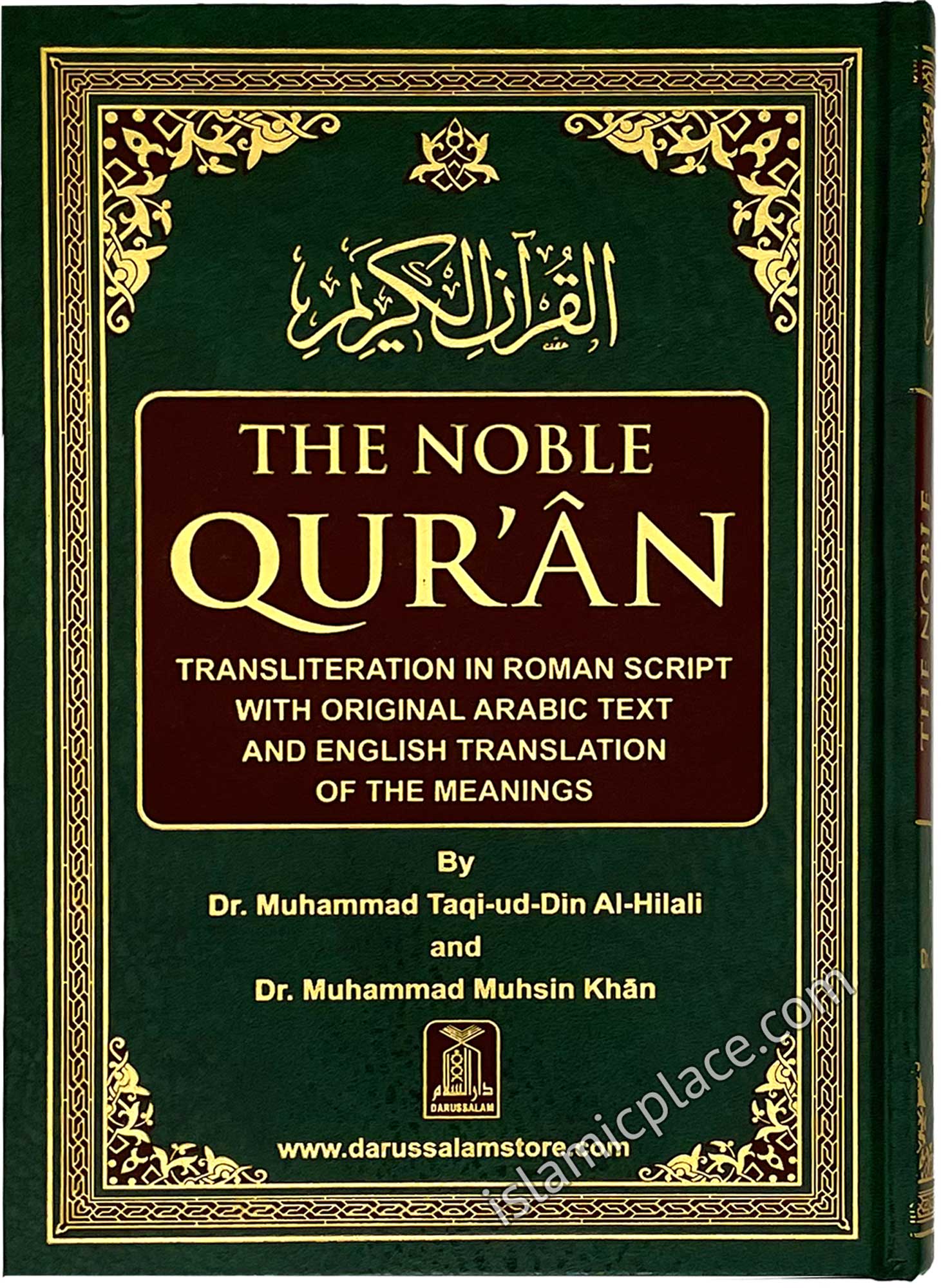
What makes The Noble Qur’an distinctive is not just its translation, but its heavy, doctrinal footnotes and parenthetical insertions, which embed a specific Salafi reading directly into the English text. For example, in Sūrat al‑Fātiḥah, the phrase “those who have earned Your anger” is rendered with an inserted gloss: “(such as the Jews),” and “those who went astray” as “(such as the Christians),” turning a general Qur’anic category into a fixed polemical identification. In verses about obedience to rulers, the footnotes stress absolute obedience to Muslim authorities and condemn rebellion in classic Saudi‑Salafi terms. In verses about shirk and bid‘ah, the notes attack practices associated with Sufism, madhhab‑following, and traditional Sunni piety, steering the reader toward a Wahhabi/Salafi understanding of tawḥīd and worship. Across the translation, parenthetical additions like “(i.e. worshipping others besides Allah)” or “(innovations in religion)” are repeatedly inserted into the Qur’anic text itself, so that the reader cannot easily distinguish between what Allah said and how Hilali–Khan interpret it.
For Black American Muslims, this had real consequences. A free, glossy, “official” Qur’an—stamped with Saudi institutional legitimacy and handed out in prisons, inner‑city mosques, and da‘wah tables—carried enormous authority. But the theology riding inside it was not neutral; it was a packaged Salafi worldview. It framed other Muslims (Sufis, Ash‘aris, madhhab‑followers, Shi‘a, even non‑Salafi Sunnis) as deviant, and it reinforced a harsh, exclusivist reading of Islam that many Black communities then internalized as “what the Qur’an says.” In practice, The Noble Qur’an functioned as both scripture and indoctrination tool: a Qur’an translation that did not just translate the words of Allah, but pre‑interpreted them through a Salafi lens, shaping how a generation of Black American Muslims understood Allah, other Muslims, and themselves.
Shaykh Luqman Ahmad, born and raised in Philadelphia Pa, and son of American converts to Islam, is an American Muslim scholar, educator, and community leader with more than four decades of service. A graduate of the Islamic University of Omdurman, with time spent at Umm al-Qura University, and in classes at the Haram in Mecca. Imam was first introduced to Islamic learning by his parents, he studied with numerous scholars, most notably the late “Sayyid Sabiq”, author of the book “Fiqh as-Sunnah”. For a list of his teachers, consult his blog at imamluqman.wordpress,com. He served as the Imam of Masjid Ibrahim Islamic Center in California for 20 years, guiding one of the region’s most diverse Muslim communities with a blend of classical Sunni scholarship and deep awareness of American social realities. Over the course of his career, he has also served as an Imam and or resident scholar at several masaajid across the country, including in Philadelphia, Toledo, Sacramento, and Folsom, California.
He is the author of several books, most notably The Devil’s Deception of the Modern-Day Salafi Sect, a widely discussed critique of contemporary Salafism, and Double Edged Slavery, an original work examining the mentality, history, and lived experience of Black Sunni Muslims in America. His writings, lectures, and community work continue to influence conversations on Islamic law, identity, leadership, and the future of American Muslim communities. Currently, he writes, does research, and is a guest khateeb at the Quba Institute in Philadelphia.


Leave a Reply