بِسْمِ اللَّهِ الرَّحْمٰنِ الرَّحِيمِ، وَالصَّلَاةُ وَالسَّلَامُ عَلَى رَسُولِ اللَّهِ صَلَّى اللَّهُ عَلَيْهِ وَسَلَّمَ، وَبَعْد
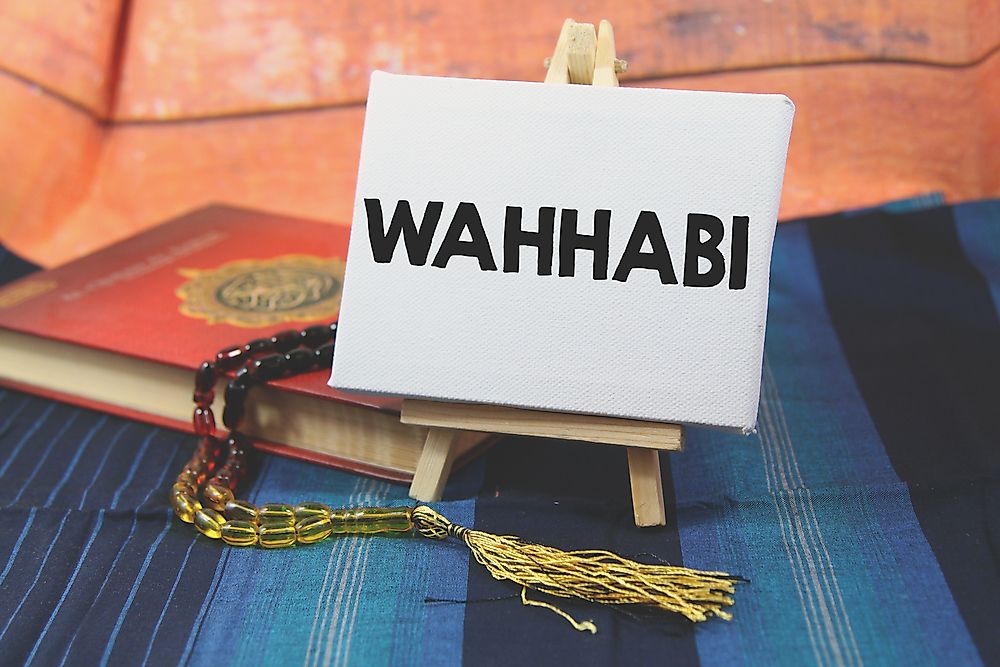
Before the 1980s, the word “Wahhabi” circulated in Muslim communities as a pejorative label—an accusation of harshness, rigidity, and an almost mechanical approach to faith. It started as a name people chose for themselves, and wore proudly, but outside the Kingdom of Saudi Arabia, the word “Wahhabi” took on a negative connotation. As the movement expanded globally, its adherents adopted a new term: “Salafi.” The word sounded softer, more rooted, more authentic. It evoked the earliest generations of Muslims, the salaf al‑ṣāliḥ, and carried a built‑in claim to purity. Yet the rebranding did not change the underlying reality that many Muslims scholars, institutions, and even governments viewed this trend as socially disruptive and religiously extreme. Not because its followers were violent, although some were, especially in places like Somalia, Pakistan, and Nigeria, but because the ideology encouraged a rigid exclusivism that undermined community life wherever it took hold.
Nowhere was this impact felt more sharply than in Black American Muslim communities. For decades, Black Muslims had built mosques, families, and institutions through cooperation, shared struggle, and a deep sense of cultural rootedness. But when modern Salafism entered these spaces, it arrived with a worldview that divided the world into two categories: those who followed its exact creed, and everyone else. Suddenly, Muslims who had prayed together for years were told they could no longer sit together. Long‑standing teachers were dismissed as “deviant.” Cultural expressions of Black Islam—music, community gatherings, family traditions—were condemned as forbidden innovations. Even basic social interaction with non‑Salafi Muslims was discouraged, while working with non‑Muslims posed no problem at all. The result was a wave of fragmentation that split mosques, strained marriages, isolated converts from their families, and turned once‑cohesive communities into battlegrounds of suspicion and sectarian policing.
For Black American Muslims already navigating racism, economic pressure, and the struggle to build stable institutions, this imported ideology functioned like a wedge driven straight into the heart of community life. It redirected energy away from empowerment and toward internal conflict. It replaced the warmth of Black Muslim communal culture with a cold, brittle certainty. And it left many people feeling spiritually uprooted, socially isolated, and cut off from the very families and communities that had sustained them. The long‑term effects are still visible today: fractured mosques, splintered organizations, and generations of Muslims who were taught to fear one another more than they feared injustice.
This is not a story about individuals. It’s about the subterfuge of ideas, and how these ideas shape communities and affect the religious trajectory of a people. When an ideology teaches people to withdraw from their own families, distrust their own elders, and reject their own cultural heritage, the damage is not accidental. It is structural. And for Black American Muslims, the cost has been immeasurable, and in the year 2026, we are still paying the cost.
Shaykh Luqman Ahmad, born and raised in Philadelphia Pa, and the son of American converts to Islam, is an American Muslim scholar, educator, and community leader with more than four decades of service. A graduate of the Islamic University of Omdurman, with time spent at Umm al-Qura University, and in classes at the Haram in Mecca. Imam was first introduced to Islamic learning by his parents. He studied with numerous scholars, most notably the late “Sayyid Sabiq”, author of the book “Fiqh as-Sunnah”. For a list of his teachers, consult his blog at imamluqman.wordpress,com. He served as the Imam of Masjid Ibrahim Islamic Center in California for 20 years, guiding one of the region’s most diverse Muslim communities with a blend of classical Sunni scholarship and deep awareness of American social realities. Over the course of his career, he has also served as an Imam and or resident scholar at several masaajid across the country, including in Philadelphia, Toledo, Sacramento, and Folsom, California.
He is the author of several books, most notably The Devil’s Deception of the Modern-Day Salafi Sect, a widely discussed critique of contemporary Salafism, and Double Edged Slavery, an original work examining the mentality, history, and lived experience of Black Sunni Muslims in America. His writings, lectures, and community work continue to influence conversations on Islamic law, identity, leadership, and the future of American Muslim communities. Currently, he writes, does research, and is a guest khateeb at the Quba Institute in Philadelphia.


Leave a Reply