
بِسْمِ اللَّهِ الرَّحْمٰنِ الرَّحِيمِ، وَالصَّلَاةُ وَالسَّلَامُ عَلَى رَسُولِ اللَّهِ صَلَّى اللَّهُ عَلَيْهِ وَسَلَّمَ، وَبَعْد
Black American Muslim communities have maintained vibrant masjid life for decades—establishing places of worship, appointing Imams, collecting zakat, and organizing Jumuʿah and Eid prayers. Yet despite this long-standing presence, we still lack a unified, comprehensive system of civil governance that addresses the most sensitive and consequential aspects of communal life. Marriage and divorce, inheritance, child custody, conflict resolution, and grievance redress remain fragmented, inconsistent, and often dysfunctional across the country.
This gap weakens our communities spiritually, socially, and legally. It is time for Black American Imams to confront this reality with seriousness and collective responsibility.
Fragmentation Across Masaajid
Across the nation, individual masjids operate in isolation when handling matters that require structure and consistency. Marriage and divorce procedures vary widely, often without standardized processes that ensure fairness, clarity, and adherence to Islamic law. Inheritance—one of the most detailed areas of fiqh—is frequently ignored or handled informally, leaving families vulnerable to confusion and conflict.
Child custody disputes and conflict resolution mechanisms are similarly decentralized. Without shared standards or inter-masjid coordination, outcomes differ dramatically from one community to another. Grievances often go unresolved, eroding trust and weakening communal cohesion.
A Long History That Demands Institutional Maturity
Islam has existed in America for generations, and Black American Muslims have been central to its establishment. This history demands institutional maturity. We can no longer rely on isolated efforts, ad‑hoc decisions, or conferences that produce inspiration but no lasting structure.
A comprehensive governance framework would:
– Standardize marriage contracts and divorce procedures
– Provide clear, fiqh‑based inheritance guidelines
– Establish consistent child custody and family dispute mechanisms
– Create formal conflict resolution and grievance bodies
– Build alliances that transcend individual masjids
Such systems must be rooted in authentic Islamic scholarship while being fully adapted to the American context. By Allah’s permission, building such a framework is within our capacity. It will not be easy, but it is necessary.
The Cost of Disunity
Disunity, community dysfunction, and chaos in our Islamic affairs are costing us dearly. Without unified governance, we risk perpetuating:
– Confusion and injustice in family matters
– Legal and emotional instability for families and children
– Fragmentation between communities
– Weak collective influence in broader societal and legal arenas
Disunity is not merely an administrative inconvenience—it is a threat to the long-term health of Black Muslim communities. We see the consequences unfolding before our eyes.
A Call to Leadership
Black American Imams are uniquely positioned to lead this transformation. Their grounding in Islamic jurisprudence and their lived experience within these communities give them the insight needed to craft governance models that are both principled and practical.
This moment requires:
– Serious, sustained dialogue
– Collaboration across masjid boundaries
– Trust-building between leaders
– Commitment to justice, unity, and Islamic integrity
Toward a Unified Future
The absence of comprehensive governance is a spiritual, social, and communal challenge. By working together, Black American Imams can establish systems that protect families, resolve disputes fairly, and strengthen the fabric of Muslim life in America.
Islam has been present in this country long enough to demand more than fragmented efforts. The time has come for unified, principled governance that uplifts and safeguards Black Muslim communities nationwide.
The Work Will Not Happen Overnight
This is not something that will happen overnight or in one sweeping motion. But Black American Muslims across the country must begin having this conversation with seriousness and clarity. Our religion requires us to establish as much of Islamic order as we are capable of.
We do not live in a Muslim-majority country; we do not control police departments, courts, or prisons. But within our own masaajid, it is fully within our capacity to establish limited but meaningful governance, especially in the areas that Islamic law places directly in the hands of the community.
We can create structured systems for marriage and divorce, mediation and conflict resolution, child custody, inheritance, and contracts between Muslims—systems rooted in Islamic jurisprudence and legally recognized within American law. Other religious communities have been doing this for decades. The issue is not ability; it is willingness. The real question is whether we are prepared to practice our religion with the seriousness, discipline, and institutional commitment it requires.
A Scholarly Reflection on Responsibility
At this point in Black Muslim America, it is no longer productive to blame the Salafis, the W.D. Muhammad community, the Sunnis, the followers of the madhāhib, the Sufis, immigrants, foreign shaykhs, “the white man,” systemic racism, social media, or anyone else for our condition. If blame is to be placed anywhere, it must begin with ourselves. We are responsible for our own actions, our own institutions, and our own neglect. Our Lord is Allah, subḥānahu wa taʿālā, and it is to Him that we will answer on the Day of Judgment.
Yes, there are historical and social factors that contributed to our current state. But what has passed has passed, and what was decreed has been decreed. Tomorrow is known only to Allah. What matters now is that we recognize our present condition—marked by disorder, confusion, and institutional fragility—and respond with what we know to be right, based on our scripture and the guidance revealed to the Prophet ﷺ.
For Black American Muslims—who share the same cities, the same socio-economic realities, the same historical wounds, and the same heritage as descendants of enslaved Africans in the United States—establishing civil governance is not merely an administrative project. It is an act of communal righteousness, a fulfillment of religious duty, and a necessary step toward justice and stability within our own ranks. And Allah knows best. Imam Luqman Ahmad
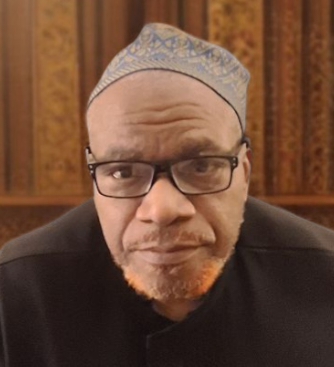
Shaykh Luqman Ahmad, born and raised in Philadelphia Pa, and son of American converts to Islam, is an American Muslim thinker, scholar, writer, educator, and community leader with more than four decades of service. A graduate of the Islamic University of Omdurman, with time spent at Umm al-Qura University, and in classes at the Haram in Mecca. Imam was first introduced to Islamic learning by his parents. He studied with numerous scholars, most notably the late “Sayyid Sabiq”, author of the book “Fiqh as-Sunnah”. For a list of his teachers, consult his blog at imamluqman.wordpress.com. He served as the Imam of Masjid Ibrahim Islamic Center in California for 20 years, guiding one of the region’s most diverse Muslim communities with a blend of classical Sunni scholarship and deep awareness of American social realities. Over the course of his career, he has also served as an Imam and or resident scholar at several masaajid across the country, including in Philadelphia, Toledo, Sacramento, and Folsom, California.
He is the author of several books, most notably The Devil’s Deception of the Modern-Day Salafi Sect, a widely discussed critique of contemporary Salafism, and Double Edged Slavery, an original work examining the mentality, history, and lived experience of Black Sunni Muslims in America. His writings, lectures, and community work continue to influence conversations on Islamic law, identity, leadership, and the future of American Muslim communities. Currently, he writes, conducts research, and serves as a guest khateeb at the Quba Institute in Philadelphia. He can be reached at: imamabulaith@yahoo.com


Leave a Reply