By Imam Luqman Ahmad
The phrase “Judeo‑Christian” entered English usage in the nineteenth century and became a distinct political and cultural idiom in the United States in the 1930s and 1940s. Early adopters—liberal Protestant and Catholic intellectuals—sought to emphasize common moral and historical ground between Judaism and Christianity as a bulwark against rising fascism and domestic antisemitism. During and after World War II the term was popularized by theologians and public figures who framed the Allied cause in moral‑religious terms; by the early Cold War it was widely used by politicians and clergy to contrast an American religious heritage with “godless” communism. In practice the phrase functioned less as a precise theological claim than as a civic shorthand for a shared Western moral inheritance.
The Founders and the Myth of a Judeo‑Christian Nation
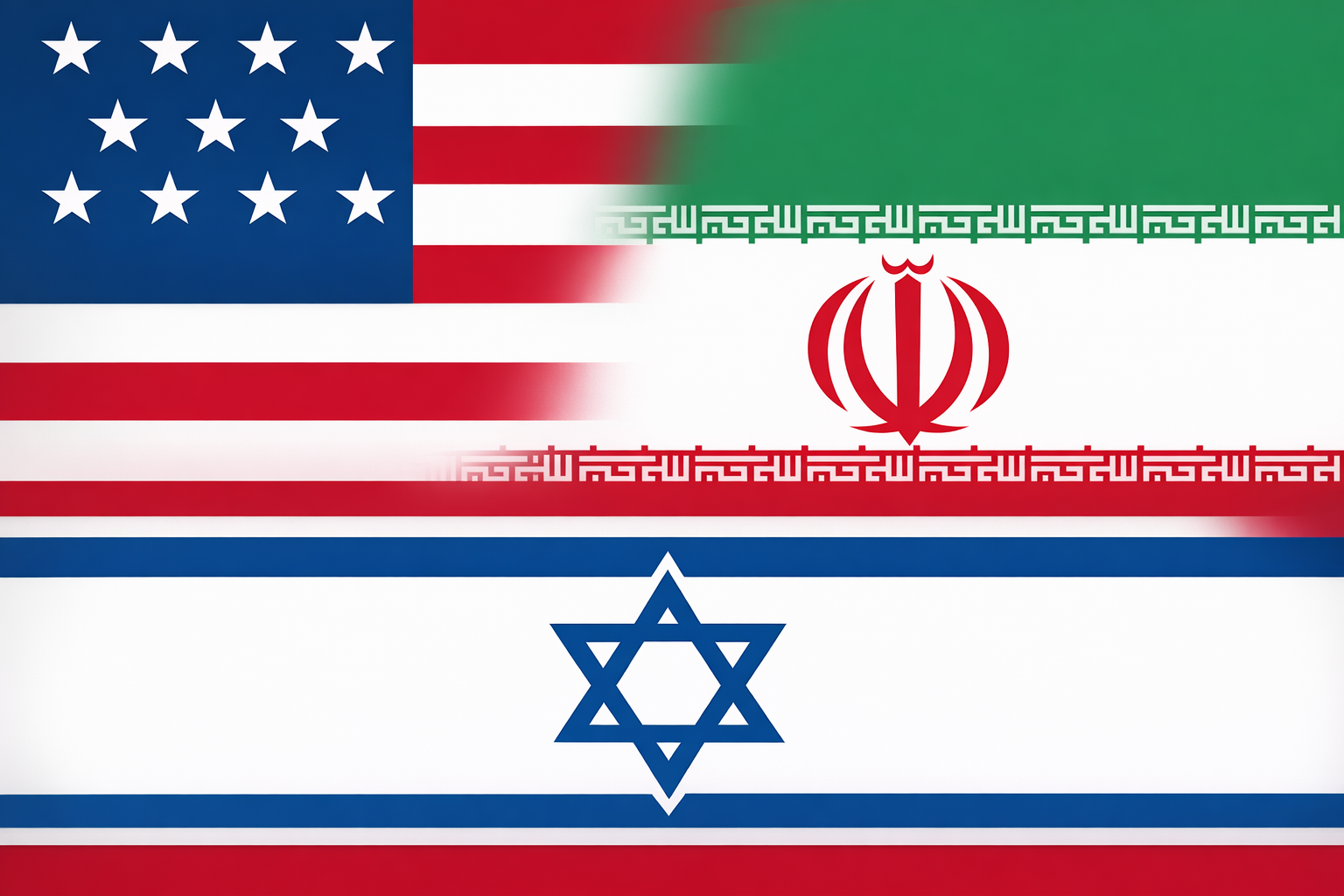
The claim that the United States is a “Judeo‑Christian country” should not be read as a literal description of the religious makeup of the Founding Fathers. Most leading founders were Protestants—Anglicans, Congregationalists, Presbyterians—and many were influenced by Enlightenment ideas and varieties of Deism; a small number were Catholic; none of the principal founders were Jewish. The founding generation held diverse religious views, and the constitutional settlement deliberately separated national government from an established church. Descriptions of the United States as rooted in “Judeo‑Christian values” therefore reflect later civic theology and political rhetoric rather than the confessional composition of the founding elite.
How the Phrase Became Politically Durable
Two features explain the phrase’s political durability. First, it provided a unifying cultural narrative at moments of national crisis—World War II and the Cold War—allowing leaders to mobilize broad religious sentiment against external threats. Second, influential public intellectuals and clergy gave the term theological respectability by highlighting ethical continuities—prophetic critique, law, and moral restraint—between Hebrew scripture and Christian teaching. Presidents and public officials invoked the “Judeo‑Christian” concept in mid‑twentieth‑century rhetoric to signal a common moral foundation for American democracy, even as critics warned that the label can obscure Jewish distinctiveness and historical tensions between the two faiths.
Religious Advocacy and Foreign Policy
In the modern era, Christian Zionist actors often coordinate with Jewish and secular pro‑Israel organizations on specific goals—embassy recognition, sanctions on Iran, and other measures—creating broad coalitions that combine theological urgency with strategic and security arguments. These coalitions translate belief into organized, visible, and electorally meaningful pressure through grassroots mobilization, summit lobbying, and elite endorsements.
Religious‑theological commitments are one of multiple inputs into foreign policy. Other powerful drivers include strategic calculations about regional balance and counterterrorism; intelligence assessments; defense‑industrial and economic interests; diplomatic alliances; lobbying by secular Jewish organizations; and domestic partisan politics. Institutional constraints—Congress, courts, international law, and bureaucratic expertise—and geopolitical realities also shape what policy options are feasible.
How the Dynamic Works in Practice
The interaction between theology and policy typically follows a pattern: advocacy groups identify a policy goal, mobilize grassroots pressure and elite endorsements, frame the goal in moral and security terms, and press sympathetic lawmakers and officials. When that pressure coincides with strategic or electoral incentives for an administration, it increases the likelihood that the administration will adopt or amplify the advocated position. Where advocacy conflicts with other strong interests or institutional checks, its effect is attenuated.
This dynamic helps explain why certain policy choices—especially symbolic acts and hardline stances favorable to Israel—have found strong support in some administrations. At the same time, those forces operate within a broader policy ecosystem in which strategic, institutional, and partisan factors are also decisive.
Eschatology, Perception, and Muslim Responsibility
Zionists, evangelical Christians, and end‑time theorists often read the upheavals in the Middle East—Israel’s expansion, the wars, and mounting regional tensions—as signs in a prophetic timeline pointing toward the return of ʿĪsā and the rise of the Antichrist. Muslims, too, hold firm eschatological beliefs about the return of ʿĪsā and the coming of al‑Dajjāl, teachings grounded in the Qur’an and authentic hadith. Yet for many Muslims in the West, preoccupied with the dunya—debates over marriage, holidays, dress, and daily comforts—these momentous developments pass largely unnoticed. The precise how and when of the Last Days belong to Allah alone; the details are known only to Him.
In the meantime, our duty is clear. We must close ranks, strengthen our congregations, and renew our commitment to community(jamaa’ah), knowledge, and mutual support to the best of our ability. Let our belief in Allah and the last Day faith spur us from complacency to informed, compassionate action: protect the vulnerable, seek justice, and stand in solidarity with each other and those who suffer. Work across communities to promote order and governance, uphold human dignity, and pursue paths that reduce harm and foster peace, but be prepared for other than peace. And Allah knows best. Imam Luqman Ahmad
Shaykh Luqman Ahmad, born and raised in Philadelphia Pa, and son of American converts to Islam, is an American Muslim thinker, scholar, writer, educator, and community leader with more than four decades of service. A graduate of the Islamic University of Omdurman, with time spent at Umm al-Qura University, and in classes at the Haram in Mecca. Imam was first introduced to Islamic learning by his parents. He studied with numerous scholars, most notably the late “Sayyid Sabiq”, author of the book “Fiqh as-Sunnah”. For a list of his teachers, consult his blog at imamluqman.wordpress.com. He served as the Imam of Masjid Ibrahim Islamic Center in California for 20 years, guiding one of the region’s most diverse Muslim communities with a blend of classical Sunni scholarship and deep awareness of American social realities. Over the course of his career, he has also served as an Imam and or resident scholar at several masaajid across the country, including in Philadelphia, Toledo, Sacramento, and Folsom, California.
He is the author of several books, most notably The Devil’s Deception of the Modern-Day Salafi Sect, a widely discussed critique of contemporary Salafism, and Double Edged Slavery, an original work examining the mentality, history, and lived experience of Black Sunni Muslims in America. His writings, lectures, and community work continue to influence conversations on Islamic law, identity, leadership, and the future of American Muslim communities. Currently, he writes, conducts research, and serves as a guest khateeb at the Quba Institute in Philadelphia. He can be reached at: imamabulaith@yahoo.com


Leave a Reply