
بِسْمِ اللَّهِ الرَّحْمٰنِ الرَّحِيمِ، وَالصَّلَاةُ وَالسَّلَامُ عَلَى رَسُولِ اللَّهِ صَلَّى اللَّهُ عَلَيْهِ وَسَلَّمَ، وَبَعْد
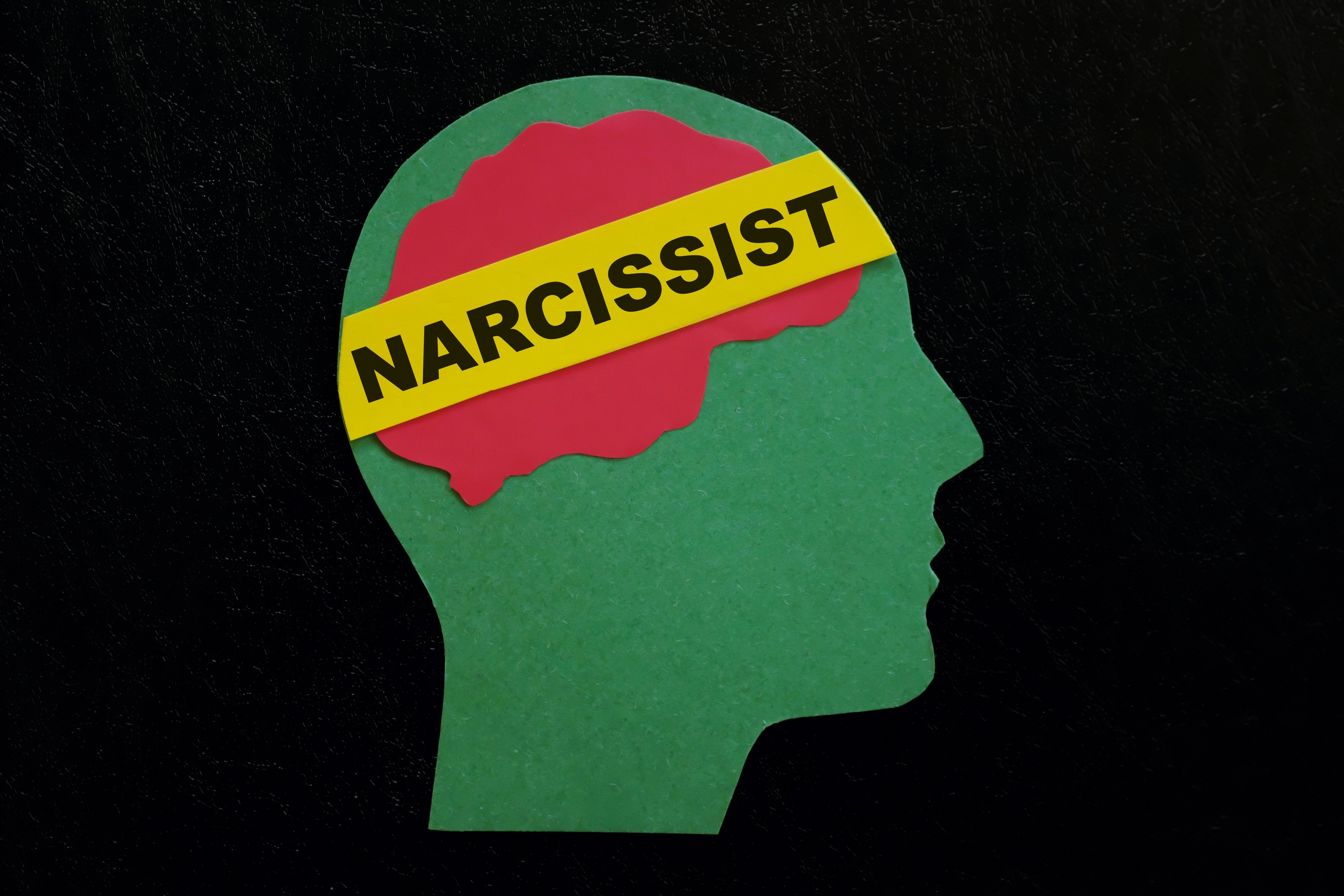
There is a word that has found its way into Muslim conversations with remarkable frequency: narcissist. It is uttered in living rooms, a staple on Facebook, WhatsApp groups, and even Islamic circles as though it were a revelation from Allah sub’haanahu wa ta’ala. Yet few who wield it so confidently, and capriciously, pause to ask: where did this word come from, and does it belong in our framework at all? Let’s talk Muslims.
What Psychology Actually Says
In clinical psychology, a discipline that has, for many Muslims, quietly assumed the authority once reserved for the Qur’an, a narcissist refers to an individual who exhibits narcissism: a pattern of behavior marked by an inflated sense of self-importance, an insatiable craving for admiration, and a striking absence of empathy for others. At its most severe rendition, this pattern constitutes Narcissistic Personality Disorder (NPD), a formal diagnosis catalogued in the DSM-5, the bible of Western psychiatry.
But here is what is worth noting: the very term narcissist is not the product of rigorous study of divine revelation; it is borrowed from Greek mythology. Imagine that. Narcissus was a handsome youth in ancient legend who became so entranced by his own reflection in a pool of water that he wasted away staring at it. Poets told the tale. Mythmakers embellished it. And then, at the close of the 19th century, Western clinicians lifted it from pagan lore and applied it to human psychology. That is the origin of the term so many Muslims now invoke with such casual authority.
What Islam Already Knew — Centuries Earlier
Here is the greater truth: Islam did not need Greek mythology to diagnose the human condition. Long before the term narcissism was coined in any European lecture hall, the Qur’an and the Sunnah of the Prophet ﷺ had already identified, named, and prescribed remedies for every trait that modern psychology now clusters under the NPD label. Islam approached these not as personality quirks or neurological variance, but as what they truly are, diseases of the heart, moral and spiritual afflictions for which Allah sub’ḥaanahu wa ta’ala holds each soul accountable. The Islamic tradition identifies these destructive patterns with precision as usual:
- Takabbur — arrogance; considering oneself superior to others
- ‘Ujub — self-admiration; being intoxicated by one’s own qualities
- Riyā’ — performing acts of worship or virtue for the praise and admiration of people
- Ḥasad — envy; resenting the blessings Allah has bestowed upon others
These are not abstract theological concepts. They are detailed, practical diagnoses with centuries of scholarly commentary behind them, supported by vrses of the Qur’an and the authentic ahaadeeth of the Prophet ﷺ. And they were articulated with devastating precision as usual, long before Sigmund Freud put pen to paper.
The Qur’an even presents us with history’s most vivid case study in narcissism: Pharaoh, a man who declared “I am your Lord Most High” (79:24), who demolished every voice that challenged his self-image, who left a trail of oppression and broken souls, and who met his end in the very waters he believed he commanded. No DSM checklist required.
Recognizing the Narcissist Through an Islamic Lens
A Muslim scholar, Imam, or sincere spiritual advisor does not need a clinical workbook to recognize these patterns. What they observe is this:
- A person who consistently belittles others while requiring constant validation for themselves
- A person who performs religious acts like prayer, charity, scholarship, not for Allah, but for an audience
- A person who leaves behind them a trail of broken relationships, broken trusts, and broken people, and feels no genuine remorse
- A person whose arrogance is so deeply rooted that even sincere advice is perceived as an attack
These are not personality quirks. In the Islamic framework, they are evidence of a corrupted inner state, a heart that has drifted far from its Maker and become enslaved to the nafs al-ammārah, the soul that commands toward evil.
The Islamic Path of Healing
Because Islam frames these traits as moral and spiritual failures, not merely psychological inconveniences, it insists on accountability and change. The afflicted individual is not simply a victim of their neurology, absolved by diagnosis. They are servants of Allah who have strayed and who carry the responsibility of tauba and return to righteousness.
The Islamic remedies are clear:
- Tawbah — sincere repentance, returning to Allah with a contrite heart
- Tawāḍu’ — the deliberate cultivation of humility, lowering the ego before Allah and His creation
- Tazkiyah — the purification of the soul, a lifelong discipline of self-refinement guided by the Qur’an and Sunnah
That said, contemporary Islamic scholars, those who are both grounded in tradition and aware of the world they live in, increasingly affirm that a formal NPD diagnosis need not be dismissed outright. It can serve as a useful map of external behavior patterns, provided it is not mistaken for the territory of Islamic moral understanding. Where professional mental health support can assist in managing behavior and protecting those harmed, Muslims are encouraged to seek it — while never losing sight of the far deeper work: the return to Allah.
Shaykh Luqman Ahmad, born and raised in Philadelphia Pa, and son of American converts to Islam, is an American Muslim thinker, scholar, writer, educator, and community leader with more than four decades of service. A graduate of the Islamic University of Omdurman, with time spent at Umm al-Qura University, and in classes at the Haram in Mecca. Imam was first introduced to Islamic learning by his parents. He studied with numerous scholars, most notably the late “Sayyid Sabiq”, author of the book “Fiqh as-Sunnah”. For a list of his teachers, consult his blog at imamluqman.wordpress.com. He served as the Imam of Masjid Ibrahim Islamic Center in California for 20 years, guiding one of the region’s most diverse Muslim communities with a blend of classical Sunni scholarship and deep awareness of American social realities. Over the course of his career, he has also served as an Imam and or resident scholar at several masaajid across the country, including in Philadelphia, Toledo, Sacramento, and Folsom, California.
The true Muslim who works within psychology does not capitulate to the secular framework wholesale. They use what is useful, filter it through the Qur’an and Sunnah, and discard what contradicts the foundations of the deen.
Western psychology, in its dominant secular form, dismisses the divine. It pathologizes without accountability, diagnoses without tawbah, and heals without God. Islam offers something far more complete: a diagnosis rooted in revelation, a treatment rooted in worship, and an accountability rooted in the certainty that every soul will stand before its Creator.
All praise and gratitude belong to Allah, who did not leave us wandering in the corridors of secular clinics, dependent on the shifting theories of those who do not know us, were not created to guide us, and who answer no authority above themselves.
We are Muslims. We have the Qur’an. We have the Sunnah. We have fourteen centuries of scholars who mapped the human heart with a precision that no DSM edition has ever matched, and never will. Use the language of psychology if it serves clarity. But never let it replace the language of revelation. That’s my naseeha. And Allah knows best. Imam Abu Laith Luqman Ahmad
He is the author of several books, most notably The Devil’s Deception of the Modern-Day Salafi Sect, a widely discussed critique of contemporary Salafism, and Double Edged Slavery, an original work examining the mentality, history, and lived experience of Black Sunni Muslims in America. His writings, lectures, and community work continue to influence conversations on Islamic law, identity, leadership, and the future of American Muslim communities. Currently, he writes, conducts research, and serves as a guest khateeb at the Quba Institute in Philadelphia. He can be reached at: imamabulaith@yahoo.com


Leave a comment