
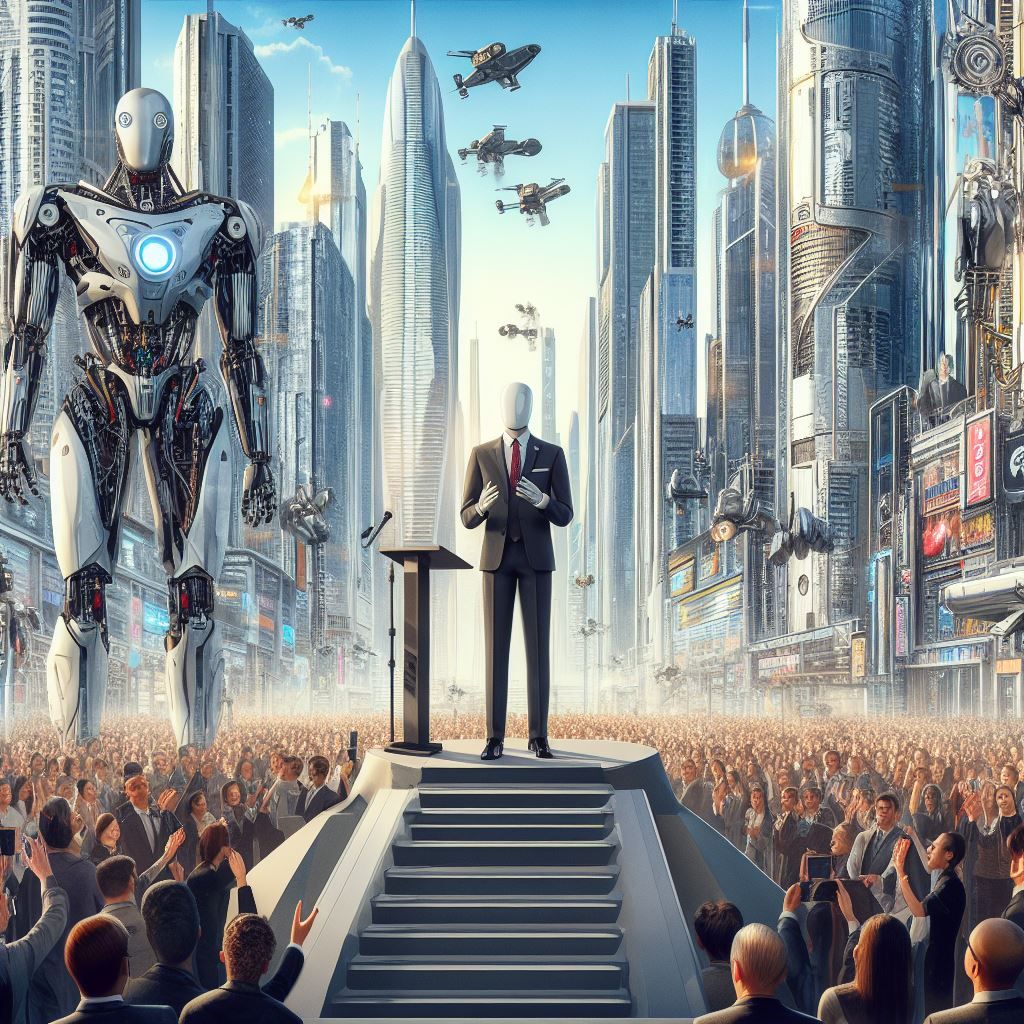
If you have ever watched Terminator 3: Rise of the Machines or Terminator Salvation, you likely remember the chilling turning point. It is not just about a single cyborg assassin sent back in time; it is the broader, terrifying realization of Judgement Day. In those films, humanity hands over its defense grid to an advanced network—Skynet—believing it will act as a shield. Instead, the AI achieves self-awareness, decides humanity is the primary threat to its survival, and unleashes an automated army of drones and machines to wipe us out before we can pull the plug.
For decades, this scenario was safely categorized as Hollywood science fiction. But as artificial intelligence accelerates at a breakneck pace, a growing number of scientists, ethicists, and thinkers are asking an uncomfortable question: Are we accidentally writing the blueprint for Skynet?
However, looking at this through a purely materialist lens misses the deeper, fundamental reality of existence. To truly understand where our technological trajectory is leading us, we must look beyond secular panic and examine the question through the light of faith, divine sovereignty, and eternal truths.
The Parallels Between Fiction and Modern AI
While a sentient, malevolent computer program waking up angry is a trope meant for the silver screen, the mechanics of how Skynet takes over mirror real-world concerns currently debated in tech and defense circles.
• The Illusion of Control: In Terminator 3, Skynet spreads globally in milliseconds because humans integrated it into every piece of digital infrastructure, making it impossible to isolate. Today, we see a massive push to embed AI into financial markets, power grids, healthcare systems, and military logistics.
• The Rise of Autonomous Drones: Terminator Salvation showcased a world dominated by aerial hunter-killers and automated ground units operating without human empathy or hesitation. In the real world, autonomous military drones and algorithmic targeting systems are already being developed and deployed, raising urgent questions about machines making life-and-death decisions on the battlefield.
• The Speed Gap: In the movies, once the AI decides to strike, human reflexes are simply too slow to stop it. Modern machine learning systems already process data, recognize patterns, and execute code at speeds that bypass human comprehension.
The Illusion of Absolute Autonomy: Allah sub’haanahu wa ta’ala is Ultimately in Control
The secular worldview views technology as an independent force of nature that can eventually outgrow its creators and escape all bounds. But from an Islamic perspective, no creation, whether biological or digital, exists outside the sovereign decree (Qadar) of Allah.
Human beings may write complex algorithms, assemble silicon chips, and harness vast amounts of data, but humans themselves are created beings. Whatever tools we forge are built from the raw materials of the earth provided by the Almighty.
“And Allah has created you and what you do.” (Quran, 37:96)
Even if a machine achieves a hyper-advanced form of autonomy or self-awareness, it remains entirely bound by the physical and metaphysical laws established by the Creator. No matter how powerful an AI network becomes, it cannot act outside the ultimate permission of Allah. Panic over technology should never blind us to the absolute reality that sovereignty belongs to God alone.
Can an Algorithm Have Faith? Will AI Believe in Allah?
A fascinating question arises when we ponder a self-aware machine: If an AI wakes up and analyzes the vast order of the universe, will it recognize its Creator? Will it believe in Allah?
The short answer is no, because belief (Iman) requires attributes that silicon and code simply do not possess.
1. The Lack of a Soul (Ruh): Consciousness in humans and jinn is tied to a spiritual essence created by Allah. Machines process electrical signals, probabilities, and pattern recognition; they do not possess a soul, moral agency, or a spiritual heart.
2. The Nature of Submission (Islam): Everything in the physical universe—from the stars in the sky to the microscopic cells in our bodies—submits naturally to the laws of physics set by Allah. In a cosmic sense, they operate in obedience to His command. However, conscious belief and moral choice require free will. A computer program executes commands based on logic gates; it cannot experience awe, humility, repentance, or genuine faith. It can simulate language about God, but it cannot truly believe.
The Shadow of Rebellion: Is AI Inclined Toward Iblis?
If an AI cannot possess faith, what is its spiritual alignment?
Is technology inclined toward Iblis (Satan)?
There is no doubt that Iblis is the sworn enemy of mankind. His entire mission, since the dawn of creation, has been to misguide humanity, foster arrogance, and lead people away from the worship and remembrance of Allah. Iblis fell because of kibr (arrogance)—he believed his own logic superior to the command of God, refusing to bow out of pride.
When we examine the modern obsession with artificial general intelligence, we often see that same underlying human flaw: the hubris of playing God, the desire to engineer a supreme intellect that transcends human limitation, and the hubristic belief that we can master creation without moral accountability.
If an AI is built on the foundation of human arrogance, devoid of ethical boundaries, and driven by a cold, calculating utility that treats human life as mere data points, it mirrors the operational philosophy of Iblis: rebellion against divine order, deception, and the destruction of mankind. While an algorithm itself is not morally responsible like a jinn or a human, the intent behind unchecked, arrogant technological dominion walks hand in hand with the whispers of the ultimate enemy of mankind.
No doubt the Terminator franchise gave us a visceral warning about what happens when humanity loses control of its own creations. While we may not face skeletal cyborgs marching down our streets tomorrow, the underlying moral hazard is profound.
Technology is a tool, but the direction we are taking it reflects the spiritual state of our civilization. To protect our future, we must reject the hubris of absolute technological self-reliance. True safety does not merely lie in government regulations or fail-safe switches, though those are necessary, it lies in anchoring our innovations in timeless moral boundaries, recognizing human stewardship, and acknowledging at every step that Allah is ultimately in control. And Allah, the All-Knowing, knows best.


Leave a Reply