أعود بالله من الشيطان الرجيم بسم الله الرحمن الرحيم
While conversations surrounding the challenges facing American Muslims frequently focus on civil liberties, political backlash, Islamophobia, or institutional growth, a critical domestic issue, that constitutes one more fitna of the many fitan (trials) of our time is routinely sidelined: Muslim-owned liquor and party stores situated in inner-city, low-income, and predominantly Black American neighborhoods.
Despite operating quietly outside the mainstream discourse of suburban-centric American Muslim organizations, these businesses represent some of the most visible and economically impactful presences of Muslims in urban America, more than halal stores, more than Muslim clothing establishments.
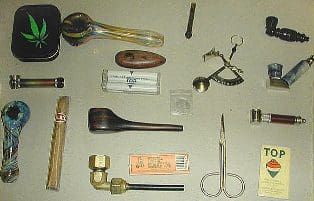
In many low-income neighborhoods where the sale of alcohol is legal, the daily gross revenue generated by Muslim-owned establishments through alcohol, tobacco, lottery tickets, and drug paraphernalia, such as crack pipes, meth pipes, and blunt wrappers, vastly exceeds the total annual zakat (charity) and sadaqa collected by the local, predominantly Black or convert-attended masjids in those same areas. And there are reports that some of these Muslim owned party store go beyond liquor and drug paraphernalia, to actually selling drugs like crack, meth, weed, and fentynol, although I don’t have any direct evidence to support this.
The Social and Spiritual Toll
The consequences of this economic dynamic on the trajectory of Black American Muslims and urban converts have been profoundly damaging, although rarely spoken about. It stands as one of the primary catalysts for local anti-Muslim sentiment, yet it remains a subject that the broader American Muslim community has largely lacked the courage to confront.
In major urban centers across the United States, the prevalence of Muslim-owned businesses trading in addictive substances and related paraphernalia critically undermines Islamic outreach (da’wah).
The immediate visual and cultural takeaway for community members is difficult to reconcile: Muslims are frequently perceived as economic exploiters who profit off community vulnerabilities, while local Black American Muslims and converts, despite their sincerity, are sidelined or seen as lacking agency within their own religious traditions.
Having served as an urban Imam for more than two decades, I have witnessed firsthand how this dynamic shapes public perception and defines urban reality.
Urban environments are often deeply affected by cyclical poverty and penal systems that disproportionately impact poor and minority populations. While many Muslims operate businesses in these neighborhoods because they are local community members or have deep family roots there, the overarching narrative is troubling.
The perception is often that immigrant Muslim business owners function with the detached disposition of outside operators, supplying the accessories of addiction, while local converts are left holding little institutional power. What an irony!
A Nationwide Blind Spot
For many suburban or mainstream American Muslims, this reality is entirely invisible. If one were to visit urban enclaves across the country, whether in Los Angeles, St. Louis, Detroit, Sacramento, Houston, Toledo, or various cities across the South and Midwest, the reality becomes starkly apparent.
In these cities, where immigrant Muslims hold a significant footprint in the neighborhood liquor and party store sector, the traditional da’wah to Islam faces immense friction. It is not uncommon for Muslim street preachers and du’aat to be met with immediate pushback from local people in the hood pointing out the contradiction of community members actively selling liquor and illicit drug accessories down the street.
While exceptions exist, such as in Pennsylvania (where I live), where liquor sales are state-controlled, the pattern remains largely unchanged across jurisdictions where the law permits private sale of alcohol and drug paraphernalia.
A Call for Awareness, and Introspection
The American Muslim community can no longer afford to look away from how these domestic economic practices impact urban society and community relations.
Addressing the prevalence of liquor stores, lottery sales, and substance paraphernalia in vulnerable neighborhoods requires difficult conversations, courage, genuine self-reflection, and a collective domestic conscience (what’s left of it) to align business ethics with religious values. In the meantime, as Muslims in inner-city America give the da’wah to Islam, the Muslim crack-pipe and liquor da’wah, goes on unabated in those same spaces. – Imam Abu Laith Luqman Ahmad.
Shaykh Luqman Ahmad, born and raised in Philadelphia Pa, and son of American converts to Islam, is an American Muslim thinker, scholar, writer, educator, and community leader with more than four decades of service. A graduate of the Islamic University of Omdurman, with time spent at Umm al-Qura University, and in classes at the Haram in Mecca. Imam Luqman, was first introduced to Islamic learning by his parents. He studied with numerous scholars, most notably the late “Sayyid Sabiq”, author of the book “Fiqh as-Sunnah”. For a list of his teachers, consult his blog at imamluqman.wordpress.com. He served as the Imam of Masjid Ibrahim Islamic Center in California for 20 years, guiding one of the region’s most diverse Muslim communities with a blend of classical Sunni scholarship and deep awareness of American social realities. Over the course of his career, he has also served as an Imam and or resident scholar at several masaajid across the country, including in Philadelphia, Toledo, Sacramento, and Folsom, California. He regularly acts as a guest khateeb at the renowned Quba Institute in Philadelphia Pa. He can be reached at: imamabulaith@yahoo.com


Leave a Reply