
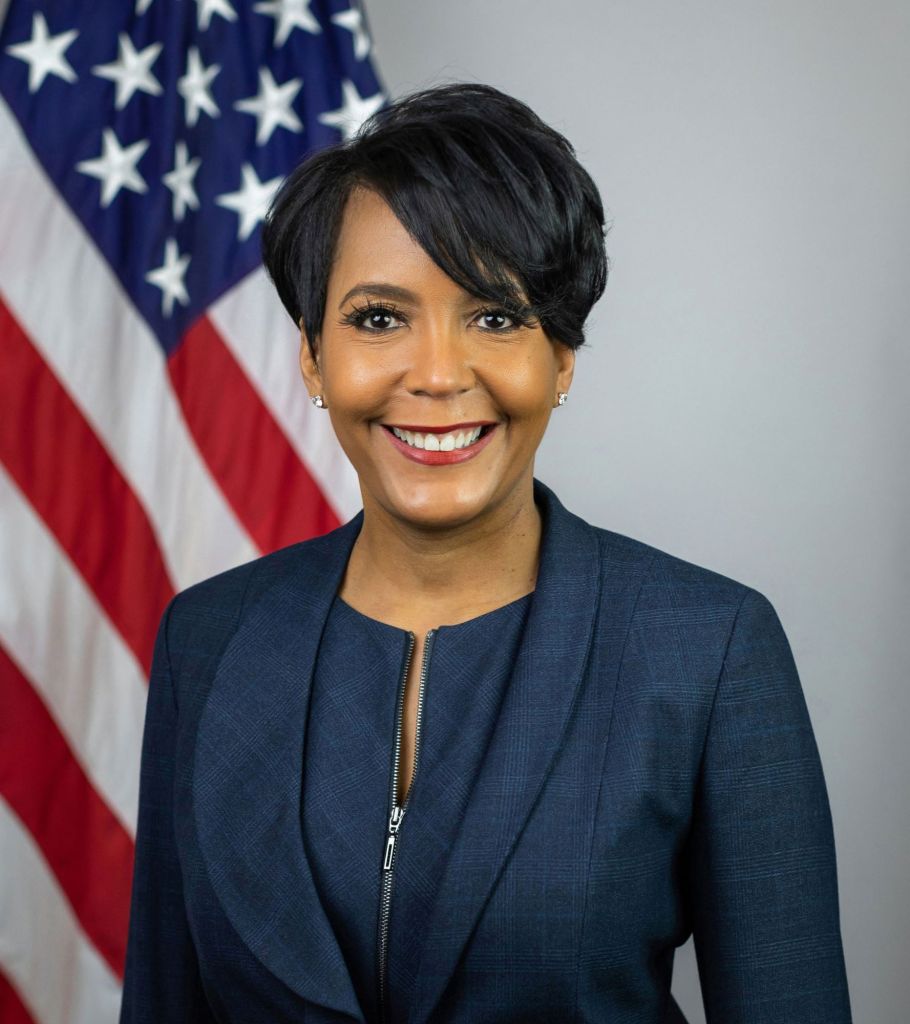
I can’t help but to be impressed and profoundly proud of our sister Keisha Lance Bottoms in her ascendancy to the Governorship of the great state of Georgia. One thing she said in her acceptance speech that really struck a chord with me. She said, she’s starting on “shoulders of steel”; a reference to her ancestors and her great great grandmother, Betsty Peak (born in 1839) The political victory of Keisha Lance Bottoms, who made history as the first Black woman elected Governor of Georgia, is rooted in a multi-generational lineage of Black women in Georgia who fought for civil rights, broke political glass ceilings, built robust voter registration networks, and reshaped the state’s electorate.
She was preceded by many unsung heroes, Black women who laid the essential groundwork for her historic trajectory:
There were Trailblazing Organizers & Civil Rights Pioneers like Lugenia Burns Hope (1871–1947). Long before Black women held public office in Georgia, Hope laid the blueprint for community-level political action. She co-founded the Neighborhood Union in Atlanta in 1908, training Black women to conduct neighborhood assessments, lobby local government for civic resources, and organize Black voters despite Jim Crow suppression.
There was Ruby Doris Smith-Robinson (1942–1967). A fierce activist and the Executive Secretary of the Student Nonviolent Coordinating Committee (SNCC), Smith-Robinson played a foundational role in organizing voter registration drives across the Deep South during the 1960s.
There was Dorothy Lee Bolden (1924–2005). Founder of the National Domestic Workers Union of America in Atlanta in 1968, Bolden mobilized working-class Black women. Crucially, she required union members to register to vote, turning domestic workers into one of Atlanta’s most effective voting blocks during the civil rights era.
There were Political Glass-Ceiling Breakers whi had historical First Impact on Georgia Politics.
Grace Towns Hamilton was the first Black woman elected to the Georgia General Assembly (1965). She championed redistricting efforts that paved the way for increased Black legislative representation across Georgia.
Shirley Franklin was the first Black Mayor of Atlanta (2001). Shw opened the doors of municipal leadership for Black women in Atlanta, serving as a direct model for Bottoms’ eventual mayoral tenure (2018–2022).
Denise Majette was the first Black woman elected to represent Georgia in the U.S. House of Representatives (2002). She showed that Black women could win major congressional seats in the state outside of local municipal elections.
The transformation of Georgia into a competitive statewide battleground, making a Black woman’s gubernatorial victory viable, was built by a collective of modern organizers, like: Stacey Abrams. Abrams revolutionized statewide organizing in Georgia. As House Minority Leader, and through her historic 2018 and 2022 gubernatorial runs, she demonstrated that a coalition driven by Black voters and communities of color could compete statewide. She founded Fair Fight Action and The New Georgia Project, setting up the turnout model that later propelled Bottoms to statewide victory.
And let us not forget Nsé Ufotormer CEO of The New Georgia Project, Ufot spent years leading boots-on-the-ground voter registration, door-knocking, and mobilization operations across Georgia, adding hundreds of thousands of new, diverse voters to the state’s voter rolls.
LaTosha Brown, Co-founder of Black Voters Matter Fund, Brown helped build the civic power of rural Black communities across Georgia, ensuring that statewide Democratic campaigns mobilized voters outside metro Atlanta.
Nikema Williams was the first Black woman to chair the Democratic Party of Georgia (and later elected to U.S. Congress), Williams modernized state party infrastructure to support diverse candidates statewide.
Helen Butler, Melanie L. Campbell, & Tamieka Atkins were leaders of organizations like the Georgia Coalition for the Peoples’ Agenda, Black Women’s Roundtable, and Pro-Georgia, these women spent decades coordinating non-partisan voter protection, census counting, and turnout networks.
Bottoms’ ascent to the Georgia Governor’s Mansion was not an isolated event; it represents the culmination of over a century of Black women organizing, breaking institutional barriers, and building grassroots electoral machinery across the state. She stands on shoulders of steel. I salute her, congratulations my sister. Imam Abu Laith Luqman Ahmad


Leave a Reply