Years ago, you didn’t have people running around boasting that they have knowledge from an authentic unbroken chain back to Rasoolillah صلى الله عليه وسلم. Nowadays you have people claiming left to right to have an unbroken chain of transmission of religious knowledge that leads directly back to the Prophet to the Muhammad صلى الله عليه وسلم . As if there is a competition about who’s knowledge is most authentic. The “my knowledge is better than your knowledge” syndrome.
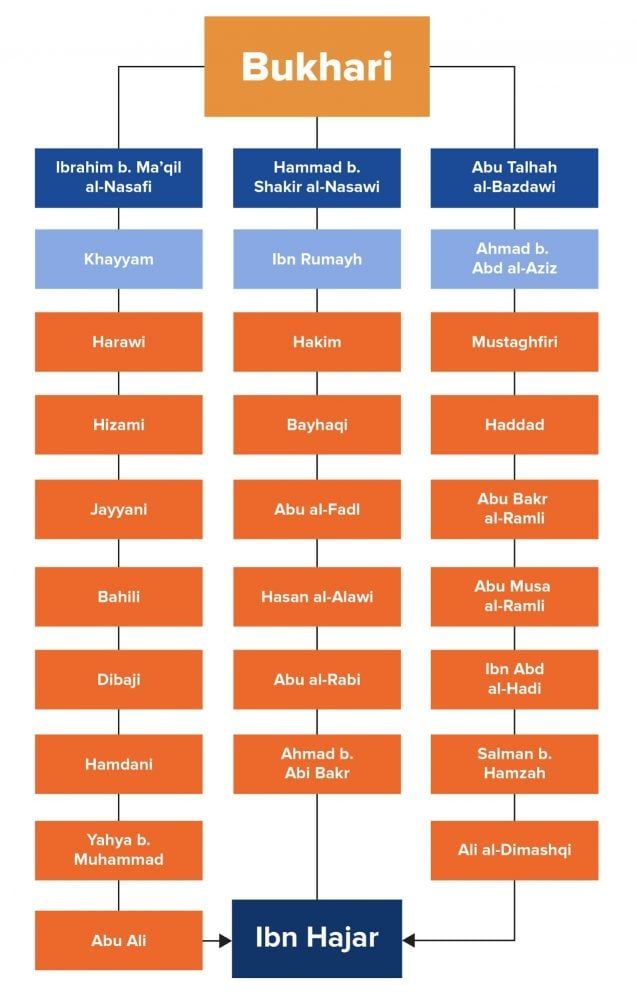
Some claim that theirs is the only authentic knowledge, and other people’s knowledge isn’t since it comes from a book and not from an authenti, unbroken chain that goes back to Rasoolillah (صلى الله عليه وسلم ). I imagined it would eventually come to this in an environment where people judge truth and knowledge by the number of followers and likes on social media.
In fact shaykhism, and the braggadocios claim of shaykhhood, and association with a Shaykh has taken on faddish currency amongst American Muslims. It doesn’t take much to declare one’s self a Shaykh these days, all it takes is a keyboard.
Some people make false claims of having this or that chain without verification, or specificity. Some do it as a way of attracting students or followers. Others claim it as a way to attained notoriety, or popularity. Claiming that you possess an authentic chain of knowledge certainly will, during these times, attract followers.
The meaning of having an unbroken chain
So what does possessing an authentic chain of knowledge mean? Does having Islamic knowledge from an authentic chain of transmission make your knowledge better? Does it make it more authentic, or more factual? If a person mentions a hadith of the Prophet صلى الله عليه وسلم that he read in Sahih al-Bukhaari, and another mentions the same hadith from an isnaad he personally had that leads back to the Prophet, it the latter better than the former?
If a contemporary scholar claims to have knowledge of Islam through an (unbroken chain), (sanad or isnad) leading back to the Prophet Muhammad صلى الله عليه وسلم means they are asserting a direct, verified lineage of transmission for their Islamic knowledge, whether in Qur’anic recitation, Hadith, jurisprudence (fiqh), or spirituality (tasawwuf).
There is certainly value in that if the claim is true, and it lends to the preservation of our religion, and religious knowledge.
The concept of isnad (اسناد), referring to the chain of narrators in the transmission of Hadith (sayings and actions of the Prophet Muhammad صلى الله عليه وسلم was not invented by a single individual but rather developed organically within early Islamic scholarship as a method to verify the authenticity of Hadith.
After the death of the Prophet Muhammad ﷺ (632 CE), Muslims became increasingly concerned about preserving his teachings accurately. As the Muslim community, and empire of Islam expanded, and fabricated narrations arose, scholars began documenting the chains of transmission to distinguish reliable reports from weak or false ones.
Scholars like Imam al-Zuhri (d. 124 AH/742 CE) were among the first to systematically use and emphasize Isnaad.
The Umayyad caliph Umar ibn Abd al-Aziz (d. 101 AH/720 CE) also played a role by ordering the official collection of Hadith with verified chains. The science of Isnaad reached its peak during the 3rd century of the Hijrah with scholars like: Imam al-Bukhari (d. 256 AH/870 CE), Imam Muslim (d. 261 AH/875 CE), and, Imam Ahmad ibn Hanbal (d. 241 AH/855 CE). They established strict criteria for accepting or rejecting narrations based on the reliability of chains.
While no single person “invented” Isnaad, it evolved as a necessary tool for preserving the integrity of Islamic teachings. Early scholars and later Hadith compilers formalized and refined the system, making it a cornerstone of Islamic scholarship.
WHAT IS A CHAIN OF TRANSMISSION?
In Islamic tradition, the chain of transmission, called a sanad in Arabic, refers to the sequence of teachers through which knowledge has been passed down from the Prophet (ﷺ) to the present scholar. For example, in Hadith studies, scholars meticulously document each narrator in the chain to ensure authenticity.
Types of Knowledge with Chains
1. Qira’at (Qur’anic Recitation): Scholars trace their recitation methods (tajwid) back to the Prophet through famous reciters like Hafs from ‘Asim.
2. Hadith: A scholar might say, “I heard this Hadith from my teacher, who heard it from his,” all the way back to a companion (*Sahabi*) who heard it directly from the Prophet (ﷺ).
3. Fiqh (Jurisprudence): Schools like Hanafi, Maliki, Shafi’i, and Hanbali have chains of teachers going back to their founding Imams, who linked their knowledge to the Prophet’s companions.
4. Tasawwuf (Sufism): Spiritual lineages (silsilah) such as Naqshbandi or Qadiri also claim unbroken chains leading to the Prophet (ﷺ
Verification of Authenticity
Not all claims of an unbroken chain are equal—some are well-documented, others may be weaker, and still others are fallacious, or simply non-existent.
That’s why traditional scholars emphasize thiqah (trustworthiness) and ittisal (continuity) in chains. A valid sanad requires each transmitter to have met their teacher and reliably received knowledge from them.
Significance in Traditional Islam
Having a sanad is a mark of credibility, showing that one’s knowledge is not just from books but from direct, authorized teaching. It preserves the tawatur (mass-transmitted) nature of Islamic knowledge, ensuring authenticity.
Modern Context & Criticisms
Some scholars today still maintain rigorously verified chains, especially in Hadith and Qira’at. However, those few scholars who actually possess verified chains of transmission leading back to the Prophet صلى الله عليه وسلم. usually aren’t bragging about it on social media.
Others may use the term more loosely, so scrutiny is needed—does the scholar provide documented evidence of their chain? Or is it just an empty claim?
If a scholar today claims an unbroken chain to the Prophet (ﷺthey are asserting a traditional, authenticated transmission of knowledge. However, the strength of their claim depends on the clarity, reliability, and scholarly recognition of their specific chain. And Allah knows best
Imam Luqman Ahmad
imamabulaith@yahoo.com


Leave a Reply