Category: Islamic Scholars
-
CHAINS OF TRANSMISSION: UNDERSTANDING ISNAAD (اسناد) AND THE ISNAAD FAD, by Imam Luqman Ahmad
Years ago, you didn’t have people running around boasting that they have knowledge from an authentic unbroken chain back to Rasoolillah صلى الله عليه وسلم. Nowadays you have people claiming left to right to have an unbroken chain of transmission of religious knowledge that leads directly back to the Prophet to the Muhammad صلى الله…
-
The Fatwa Fiasco in Convert Muslim America, Imam Luqman Ahmad
When Allah or His Prophet ص prohibit something, it is prohibited for sure. But when scholars prohibit things, especially things they don’t fully understand, for people with whom they are unfamiliar, it can cause unneeded chaos. Even more chaos when a scholar prohibits something he doesn’t fully understand, and without direct textual evidence to boot…
-
Should a Muslim follow a Particular Madhhab (school of religious law)? By Imam Abu Laith Luqman Ahmad
Should a Muslim follow a madhhab (school of law)? Does he or she have to? Does following a madhhab make practicing Islam easier? What is a madhhab anyway? The word madhhab comes from the Arabic word tha-ha-ba (ذهب)which means to go. Lexically, the word madhhab (مذهب) means a path, a position, a trend, or direction.…
-
Muhammad Ismail Al-Bukhari, Preserver of sacred tradition,
When we discuss a scholar of the highest caliber, such as Imam Al-Bukhari or the founders of the major schools of Fiqh, it is important to know what sort of person that scholar was. The first quality we note in Al-Bukhari was his great piety. He was a man who frequently spent hours in voluntary…
-
Eight signs that your sheikh, just might be a fake, by Imam Abu Laith Luqman Ahmad
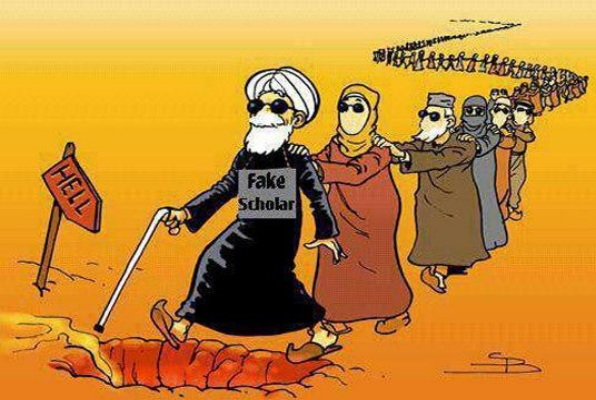
So how can you tell a real sheikh or scholar from a pretender or a false one? Below are seven different traits to look for that may reveal that your sheikh is actually a fake or a con-man.
-
The Dangers of Making things Haraam, Without Having Clear Evidence, by Shaykh Luqman Ahmad
There is enough prohibited activity in people’s lives today to keep us busy for the rest of the century. There is no need to go about searching for new things to declare haraam.
-
Fatwas and the Responsibility of Muslim Scholars in America, by Shaykh Abu Laith Luqman Ahmad
Scholars of Islam are responsible for upholding the sacred trust that accompanies the acquisition of religious knowledge; which is to explain the religion clearly and concisely and not cover up any part of it.

