When Allah or His Prophet ص prohibit something, it is prohibited for sure. But when scholars prohibit things, especially things they don’t fully understand, for people with whom they are unfamiliar, it can cause unneeded chaos. Even more chaos when a scholar prohibits something he doesn’t fully understand, and without direct textual evidence to boot That can have devastating and far reaching consequences.
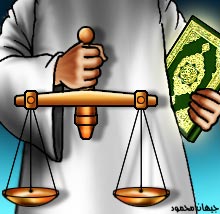
The lawful and the prohibited (halal and Haram) are clear in Muslim scripture (the Quran and the Sunnah). As in the hadith, “Verily the lawful is clear, and verily the unlawful is clear and between those two or issues that are ambiguous, most people do not know them”
Outside of what’s clear in the sharia (Islamic law), things can get murky. In the hadith of Nu’maan ibn Bashir, the Prophet صلى الله عليه وسلم said, “verily the lawful (حلال) is clear, and verily the prohibited (حرام) is clear, and between are ambiguous matters that many people do not know”. Those gray areas are often mitigated through detailed explanation (شرح), or through an Islamic process of legal deduction called fiqh (فقه), or through the employment of a fatwa/ فتوى (religious edict) issued by a scholar (shaykh), a judge (qaadi), a ruler, or an Imam.
Fatwa overload?
American Muslims have been inundated with fatwas of all sorts, coming from different (often unknown) sources, on different topics, from different times and places in history, with virtually no sort of regulation, no order, or filtering. Oftentimes a fatwa is out of context, and many times there is little or no coherency in a ruling issued by a Shaykh.
American Muslim immigrants and second and third generation Muslim Americans usually have their own traditional and historical sources and pathways by which they derive real-time and actionable Islamic knowledge when it comes to fatwa. They have generations of local scholars, tradition, religious practice, family, and Islamic culture to fall back on, even as relatively new immigrants to the United States.
Arab American Muslims for example, tend to follow Arab scholars, and scholars from their countries of origin, or those who are familiar with their situational reality, their history, culture, and social-islamic nuance. The same goes for American Muslims who hail originally from Turkey, Afghanistan, Pakistan, India, Somali, Bosnia, and other Muslim societies around the globe.
In their home country, Egyptians aren’t likely to consult a fatwa that comes from scholars in Nigeria. Pakistani Muslims aren’t likely to accept a fatwa about Pakistanis from a scholar in Libya, Malaysian Muslims would not likely go for a fatwa concerning them from a scholar from South Africa. It doesn’t work that way in Muslim countries. It wouldn’t happen in their home country, and it doesn’t happen in the American immigrant communities here in the United States.
As for the American Muslim convert communities and their second, third and fourth generations, it’s different. We Don’t have quite the generational history of scholarship, tradition, and standardized Islamic practice. People are coming into Islam from an entirely different religion. The religion is new, and the religious cultural practice is new. So it’s open season.
There are unvetted and unfiltered fatwas coming at them from all over the place, with a wide variety of interpretations, contradictions and consequences. It seems that anyone and everyone has a license to make or advance a fatwa to the convert community. Furthermore because of the subtle and not so subtle sentiment of racism in Muslim America, there is little regard for indigenous American Muslim scholar’s ability to make a fatwa on issues concerning them.
You may see a fatwa from modern day Saudi Arabia, one from second century Baghdad, one from twelfth century Egypt, one from a scholar living in Medina, one from an Abbasid era scholar in Syria, maybe one from Ottoman Turkey, a North African sufi, or any one of thousands of scholars, places, and periods of time, all weighing in on the same issue.
Wayward fatwas
For American Muslim convert communities, this kaleidoscope of fatwas has had minimal positive effect on the practice and understanding of Islam over the years, and arguably has done more harm than good. Even the most outrageous fatwa would clear the borders and find circulation in the United States, like the fatwa that prohibits living in America. Lol. (not kidding).
Oftentimes there is ambiguity about the authority, personage, and qualification of the one who issued the fatwa. Many times the fatwa giver (mufti) is not even a contemporary of the issue itself, and may have lived hundreds of years before, and some far away land. Yet, the fatwa is given governance status over ordinary, unsuspecting Muslims.
Even when Scholars are contemporary, they have made entire days haram in their fatwas. Such as when they prohibited Thanksgiving day in America, based on the notion that because it is something that Christians do, it automatically warrants prohibition. Notwithstanding that Thanksgiving Day is a day of thanks, feeding food, family gathering, and strengthening family ties, all of which are supported by prophetic tradition (sunna).
There was one fatwa outlawing football, a sport that is dominated by black players professionally in the United States. The basis of the fatwa was that football is a waste of time. However, the same body of scholars left alone soccer (also called football) which is popular in the Arab and Muslim world.
People would avoid attending the funerals, and family gatherings of their non-Muslim relatives because of a wayward fatwa. People showed hostility to non-Muslims who meant them no harm, because of a fatwa. Lawful has been made prohibited and vice versa because of a wayward fatwa.
Toxic fatwa overload has produced nearly a half a century of generational damage to the convert Muslim community in the United States, and no one wants to talk about it.
A wayward fatwa can sever a relationship, split a masjid community in half, prompt a divorce, end a project, or derail it, just because shaykh so and so, who may have never been to the United States, or who died hundreds of years before this country was a republic, said such and such in a fatwa.
Fatwa Abuse
For all the judicial weight that are afforded then in convert Muslim America, fatwas can be unbelievably short, and ambiguously worded, sometimes no longer than a single sentence. In comparison, according to the American Bar Association, the average Supreme Court opinion in the United States is 4,751 words long. Since there’s no body to regulate fatwa trafficking in the United States, what you end up with is a fatwa free for all. People will refer to these various fatwa (plural fataawaa) to weigh in on a contemporary issues affecting Muslims, mainly converts to Islam living in the United States. Sometimes with less than honorable intentions, and disastrous consequences. This is the nature of the circus.
Fatwas and Motives
Sometimes, more often than not, fatwas are issued for political reasons, or dislike for American culture, or other ulterior motives. Even racism can be a motive for a fatwa. In the late 1800s when the Ottoman Caliph banned the sale black slaves, the Amir in Hijaaz was so incensed that he issued a fatwa declaring a jihad against the Turks, and made the shedding the blood of Turkish women and children permissible. Slavery wouldn’t be banned in Saudi Arabia until 1962.
Fatwas over scripture?
Fatwas are not meant to override scripture. The purpose of fatwa is to augment scripture and provide clarity when the law is unclear. A fatwa can to clarify ambiguities found in understanding and implementing religious practice in Islam. However, fatwas are often prioritized over scripture, and in contradiction to it, with disastrous, life altering consequences.
Sometimes the author or issuer of the fatwa is totally unknown to the person reading it. In most cases the mufti or renderer of the fatwa is not available to explain what he meant by the fatwa because he died a long time ago. In the modern age, where information is globalized, fatwas, arguably cause more disputes than they settle.
In 2010, an American scholar issued a fatwa declaring it an obligation upon every Muslim living in the United States to wage jihad (holy warfare) against his or her countrymen. I wrote a response to that fatwa which you can read here on my blog. Nevertheless, the fatwa was taken to heart by many American Muslims and law enforcement surveillance on American Muslims was increased proportionally.
A few years ago, a dispute between American Muslim activists in Oakland CA, who wanted to curb Muslims selling alcohol in poor neighborhoods, and Muslim businessmen in who sold it, resulted in a fatwa out of Egypt declaring it permissible for American Muslim businessmen to sell beer and alcohol to non-Muslims.
This fatwa became a precedent for Muslim purveyors of intoxicants in other states who used it to justify selling beer, wine, and other intoxicants. Anyone having an issue with the sale of alcohol and intoxicants, is simply silenced by the fatwa allowing it.
Filtering fatwas
How to navigate through the myriad of fatwas? Do you need fatwas in order to understand your religion? People need to understand their religion for obvious reasons. But where do you start? Well you don’t start with fatwas, that’s for sure.
Generally you start with knowing the things that Allah has made incumbent upon you. Start with yourself before anybody else.
Conclusion
There is no quick solution to the epidemic of frantic fatwa frenzy. For a Muslim living in the United States . As more and more Muslim American converts are becoming versed in the Islamic legal sciences, and aware of the results of wayward, and recklessly applied fatwas circulating in America, these fataawaa have come under greater scrutiny.
In recent years there have been considerable pushback against wayward, obtuse, and reckless fatwa that impact people’s lives and their practice of the noble religion of Islam.
Additionally, Muslims in the United States are taking note of the double standard in how fatwa are positioned when it comes to converts to Islam in America, who are mostly black. Qualified, knowledgeable, and competent imams could act as a bulwark against wayward fatwa, but they are in short supply.
People actually studying Quran hadith, fiqh and having accessible teachers of the religion would certainly help alleviate some of the fatwa fitna, but right now, we are fighting a losing battle. Wal Allahul Musta’aan.
In reality, most fatwas circulating in America are issued by non-american scholars, many who have been dead for hundreds of years, and had no knowledge of life in America and the nuance of modern American society. In modern times, fatwas have been issued by scholars who consider themselves enemies of the United States, or by scholars with other political or financial motives in mind.
Some fatwas are issued out of sheer ignorance, or bias towards a people, their history, culture or language. The anti-Thanksgiving fatwas contributed to the severing, or severe curtailment of many family relationships.
Needless to say, fatwas play a big part in how many American Muslims, especially converts, look at the world, how they look at themselves, and and how they look at the religion of Islam.
You often see ‘feuding fatwas’ where you’ll see two or more fatwas in conflict with one another. One fatwa will say that something is permissible, and another fatwa will say that the same thing is prohibited, leaving the poor fatwa following Muslim (and there are many) in a state of perplexity and contention with one another. Fatwa feuds between Muslims, especially converts to Islam, are not uncommon in the United States.
Fatwa And Consequences
Ultimately, a fatwa is a legal opinion which may, or may not be obligatory as law. If a fatwa is made by a duly appointed judge, in a Muslim country, it carries the weight of law, like a Supreme Court decision. It it is the opinion of a scholar in a non-official decision, not connected to a judicial process, then not so much. The problem is, that many people do not know the difference.
Sometimes you’ll see fatwas feuding with primary religious texts (scripture). In such cases you need a scholar, preferably one you can talk to, or a knowledgeable Imam, to explain it to you. “Ask the people of their (Quran) if you don’t know”. Ibn Qayyim (d. 1350 C.E.) wrote in his book I’laan al-Muwaki’een that a person is not obligated in any way to accept a fatwa that on the surface contradicts text (Quran and Sunnah).
Still, it is not entirely uncommon to see a fatwa that on the surface, contradicts textual evidence. This happens for a variety of reasons which I won’t explain all of them here.
However, one reason is that some fatwa are interpreted with a liberal and high latitudinal understanding of the primary religious text, such as in the hadith (prophetic tradition) “whoever imitates a people, then he is of them”. Scholars have went to town on this hadith in it’s usage to declare anyone to be a disbeliever with this hadith as your format, without providing any clarity. If a person dresses like a non Muslim dresses, he or she can be labeled a non-Muslim, or an apostate, using this hadith as a basis for the fatwa. This is often the go-to hadith when one Muslim wants to declare another to be not Muslim.
The fact that remains though, that fatwas have consequences. Acting on it means that you’re acting on what God would want in the situation , or acting in a way that would be most congruent with His guidance. The decision to ban women from school in Afghanistan was rendered by way of a fatwa. Many years before, when hijab was banned in Turkish universities, the ban was in a fatwa
Oftentimes a fatwa amounts to a triangulated, even morbid interpretation of a verse in the Quran, or a hadith of the Prophet صلى الله عليه وسلم . People have routinely used fatwa to shame others, to pressure the unknowing, or for moral blackmail.
A recent fatwa I read said; “if a woman is married to a man who does not pray in congregation or at home then that marriage is invalid because the one that he is not pray is a kaafir”. That was the complete text of the fatwa. The fatwa is obviously flawed, ambiguous, lacking completion, lacking context, and problematic. However , here it was, floating on social media. If the marriage is invalid as stated, then they both are committing (fornication) zina. Implementing this fatwa opens up a can of worms. The proclamation of kufr, requires a trial and the ruling of a judge, not a wife. That’s just for starters. All the four schools require procedure and proof before any declaration of kufr on anyone who has shahaadah. Any accusation in islam, of any kind requires evidence, proof, a confession, or witnesses as well as procedure. That is basic fiqh (law), yet the fatwa was circulating in broad daylight on social media, and a Muslim woman somewhere is likely to go home and declare her husband a disbeliever and have no clue as what to do next.
Incidentally, most books of fiqh have a section on abandoning prayer. Islamic law requires that you have to watch a person for at least 24 hours to see that he have neglected all his prayers for that day. Then you have to question him to see if he rejects the obligatory nature of prayer. Then you have to offer him the opportunity to repent. Then you, yourself must be aware of the law in the matter. Then there is the matter of divorce. It it a talaq? A khula? Or fiskh? Is there an idda? If he’s a kaafir, then for how long? If there is children, do they inherit? All that can be tossed to the side and ignored because of a one paragraph cluster bomb fatwa.
Shaykh Abu Laith Luqman Ahmad
Imamabulaith@yahoo.com



Leave a Reply